
Frankie Ruiz, the Puerto Rican salsa legend known as 'El Papa de la Salsa,' left behind an estate estimated at somewhere between $3 million and $5 million at the time of his death in August 1998. That range comes from the most credible, conservative sources available.
Frankie Ruiz Net Worth 2026 Estimate and Wealth Breakdown

Marcus Holloway
14 May 2026
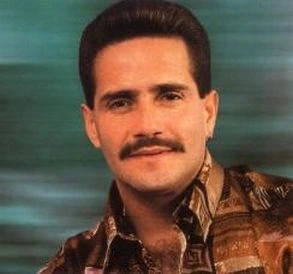
Some databases throw out figures as high as $40 million, but those numbers don't hold up to scrutiny when you look at what his actual career earnings, royalty structure, and documented health-related financial setbacks could realistically support. If you're searching for 'Frankie Ruiz Jr. net worth,' it's worth knowing upfront that Frankie Ruiz Jr.
If you're searching for "franky venegas net worth" as a related option, you can compare how different artists' career paths affect what estimators come up with. is his son, born in 1984, who is a separate person with a separate career.
Who Frankie Ruiz (and Frankie Ruiz Jr.) actually are

Frankie Ruiz was born José Antonio Torresola Ruiz on March 10, 1958, in Paterson, New Jersey. He died on August 9, 1998, in Newark, at just 40 years old, from liver failure linked to years of alcohol and drug addiction. In between, he built one of the most recognizable careers in tropical music, earning a devoted fanbase across Latin America, the Caribbean, and the U.S. Latino community. He got his professional start with Tommy Olivencia's band in 1982, then launched a solo career that produced a string of charting albums through labels like Rodven and PolyGram.
The 'Frankie Ruiz Jr. ' naming variant trips up a lot of people searching for financial information. Ruiz Jr. , born in 1984, is the salsa singer's son, and he has his own presence as a musician, sometimes billed as 'El Hijo de la Salsa' (the son of salsa).
Ruiz Jr. is described by Codiscos using the naming variant “Frankie Ruiz Jr / el hijo de la salsa,” identifying him as the son of salsa artist Frankie Ruiz [“Frankie Ruiz Jr / el hijo de la salsa”](https://www. codiscos. com/artists/Frankie-Ruiz-Jr.
). He has a separate Spotify artist page and has released music under that identity. So if you landed here looking specifically for Frankie Ruiz Jr. , the younger musician, the wealth figures below apply to his father, not to him.
The son is a living public figure building his own career, and any estimates for him would need to be researched separately.
The net worth estimate: what the numbers actually say
The most grounded figure I've found places Frankie Ruiz's net worth at the time of his death at approximately $3 million, which MusicianWages.com attributes to Celebrity Net Worth. Celebrity-Birthdays.com, last updated in December 2023, reports $5 million. Those two figures form a reasonable range that's consistent with a highly successful regional Latin music career from the mid-1980s through the mid-1990s, accounting for the significant earning disruption that came when his health collapsed in 1996.
The $40 million figure published by NetWorthList.org is not credible in this context. For comparison, that figure would place Ruiz alongside globally famous acts with decades of sustained touring, merchandise, and diversified income. His catalog, while beloved, was concentrated in tropical salsa markets, and his active career was cut short before his peak earning window could fully mature. The $40 million estimate appears to be unanchored to any documented income source, and I'd treat it as data pollution rather than a real estimate.
Moonchildrenfilms.com publishes a more granular breakdown, including a '1998: $10 million' figure and a table mapping years to values, citing sources like Forbes and The Richest. That's a more interesting attempt at a longitudinal estimate, but it should be read carefully: net worth figures that map neatly to specific years for a deceased artist from the late 1990s are almost always reconstructed estimates, not contemporaneous financial disclosures. The $3 to $5 million range remains the most defensible.
How Frankie Ruiz made his money

Ruiz's income came from the typical mix for a major Latin recording artist of his era: album sales, live performance fees, radio and TV appearances, and songwriter/publishing royalties. His solo discography ran from 1985's 'Solista Pero No Solo' through 1996's 'Tranquilo,' with major releases including 'Voy Pa' Encima' (1987), 'Más Grande Que Nunca' (1989), and 'Mi Libertad' (1992). That's eight studio albums over roughly a decade, with multiple compilations and live releases padding the catalog further.
Live performance was almost certainly his biggest single income source. Latin salsa artists of his stature in the late 1980s and early 1990s commanded significant fees for concerts and festival appearances across Puerto Rico, Colombia, Venezuela, the Dominican Republic, and the continental U.S. His recognition from Billboard Latin Music Awards and ASCAP Latin Awards reflects the commercial weight his recordings carried in those markets.
Posthumously, his back catalog continues to generate royalties through streaming and physical sales. AllMusic documents his catalog availability, and his presence on streaming platforms means his estate (The Frankie Ruiz Estate, LLC, registered in Miami Lakes, Florida) likely continues to receive royalty distributions through ASCAP, BMI, or equivalent performance rights organizations. Sunbiz.org entity search results list “FRANKIE RUIZ PRODUCTIONS LLC,” which can help readers verify whether this business entity existed in Florida’s registry. Business entity records also show a 'Frankie Ruiz Productions LLC' in Florida, which suggests some degree of organized business infrastructure was in place during or after his career.
Peak years vs. the financial collapse at the end
Ruiz's peak earning years were almost certainly 1987 through 1993. That period covers his most commercially successful albums, his heaviest touring schedule, and the height of salsa romantica's mainstream popularity in Latin markets. Albums like 'Voy Pa' Encima' and 'Más Grande Que Nunca' were genuine radio staples, and that kind of consistent charting translates to both label advances and strong touring demand.
The financial trajectory shifted sharply in 1996. Wikipedia documents that his liver began to fail that year, leading to hospitalization and a temporary coma. During intubation, his vocal cords were damaged, which was a catastrophic blow for a singer whose voice was literally his asset. He was subsequently in and out of the hospital with cirrhosis and hepatitis, went on a performance hiatus, and attempted a comeback starting in November 1997. A late-career recording project was eventually cancelled when his condition worsened further. He died in August 1998.
That two-year period from 1996 to 1998 almost certainly eroded his liquid wealth significantly. Medical costs for chronic liver disease and multiple hospitalizations are substantial, and he was not actively touring or releasing new material during most of that time. Any honest net worth estimate for Ruiz needs to account for these documented financial headwinds on top of whatever he had accumulated during his peak years.
How net worth estimates like this one are actually built

For a deceased artist like Frankie Ruiz, net worth estimates are always reconstructions. No one has access to his personal bank statements or tax returns. What estimators typically do is triangulate from known income data: label advances and royalty rates for his era and market, estimated live performance fees based on comparable artists, any documented business filings, and estate-related public records. That triangulation then gets adjusted for known liabilities: medical bills, legal costs, outstanding debts, and lifestyle expenses.
The challenge is that this process introduces a lot of room for variance. A database that anchors on peak-career revenue without discounting for the 1996 to 1998 health crisis will produce a much higher number than one that tries to model the full picture. That's why you see $3 million and $40 million existing side by side on the internet, and why the range matters more than any single number. When I weigh the evidence, the $3 to $5 million range accounts for the known financial disruption at end of life, while the $40 million figure simply doesn't.
It's also worth distinguishing between net worth at death and the current value of his estate. If The Frankie Ruiz Estate, LLC has been actively managing his catalog rights since 1998, the present value of those assets could differ from what he personally held at death, depending on how streaming revenue and licensing deals have accrued over nearly three decades.
Which sources are worth trusting and which to skip
Here's a practical breakdown of the sources in play and how much weight to give each one:
| Source | Estimate | Reliability Notes |
|---|---|---|
| Celebrity Net Worth (via MusicianWages.com) | $3 million (at death) | Conservative; one of the more widely cited databases; still an estimate, not a verified figure |
| Celebrity-Birthdays.com | $5 million | Updated December 2023; mid-range figure consistent with career scope; no sourcing methodology disclosed |
| Moonchildmenfilms.com | $10 million (1998 figure in a year-by-year table) | More granular but cites Forbes and The Richest without direct links; treat as illustrative, not authoritative |
| NetWorthList.org | $40 million | Almost certainly inflated; no credible income source supports this figure for an artist of his market scale |
| Wikipedia (biographical data) | No net worth figure; provides career, health, and death timeline | Highly useful for career context and income-period verification; not a wealth estimator |
| Florida business registries (Sunbiz, BISprofiles) | No dollar figures; entity existence only | Useful for verifying estate structure and ongoing business activity; requires further digging to interpret |
If you want to verify or refine the number yourself, the most productive paths are: checking Florida's Sunbiz entity registry for 'Frankie Ruiz Productions LLC' and 'The Frankie Ruiz Estate, LLC' to see if those entities are active and what registered agent or address they show; searching probate court records in New Jersey (where he died) for any publicly filed estate documents; and cross-referencing AllMusic and streaming platforms to gauge how active his back catalog is, which gives a rough sense of ongoing royalty income. ASCAP's public database also lets you search for songwriter registrations, which can confirm whether his compositions are still generating performance royalty income.
The bottom line and how to stay current
The most defensible estimate for Frankie Ruiz's net worth is in the $3 to $5 million range at the time of his death in 1998. His peak earning years in the late 1980s and early 1990s gave him a solid financial foundation, but the documented health crisis from 1996 onward significantly disrupted both his income and his ability to accumulate further wealth before he died at 40. The $40 million figure circulating on some databases is not credible given what we know about his market, career timeline, and circumstances at death.
For anyone specifically searching 'Frankie Ruiz Jr. If you're searching for Frankie Ruiz Jr. net worth as well, keep in mind it covers a different living person and his wealth must be researched independently. If you meant Frankie Ruiz Jr.
net worth instead, note that the son is a separate living musician, so his wealth needs to be researched independently Frankie Ruiz Jr. - p26s1: net worth. net worth': that refers to a different, living person who is Ruiz's son and an active musician in his own right. His financial profile is separate and would require its own research.
Similarly, if you're exploring wealth profiles for other Latin entertainers in this space, the financial trajectories of figures like Frankie Moreno or Frankie Kazarian offer interesting comparisons in terms of how entertainment careers in niche-but-devoted markets translate into long-term wealth. If you are also looking at Frankie Moreno net worth, compare how different Latin music career paths and market reach can create very different wealth outcomes.
If you're also curious about Frankie Kazarian net worth, you can compare how his wrestling career and related entertainment income stack up against Frankie Ruiz's different music-driven earnings.
To get the most current picture, bookmark this page and check the Florida business registry and ASCAP database every year or two. Estate activity, new licensing deals, or updated probate filings can shift the picture meaningfully, especially as streaming continues to surface legacy Latin catalog to new audiences. The number you find today is an estimate built on the best available evidence, and that's exactly how it should be framed.
FAQ
Why do some sites claim Frankie Ruiz net worth is as high as $40 million when others say $3 to $5 million?
Most high figures come from guesswork that does not fully account for his late-career income collapse in 1996 to 1998. A more credible method discounts peak earnings for the period he could not tour or record, and it separates catalog value from what he personally held at death (net worth at death is not the same as current catalog earnings).
Does the Frankie Ruiz net worth estimate refer to money he had personally, or what his estate is worth today?
The range discussed is about his financial position around the time of death in 1998. The present value of estate-controlled rights could be higher or lower depending on licensing deals, streaming payouts, and how expenses and distributions were handled by the estate over time.
Is “Frankie Ruiz Jr. net worth” the same person as Frankie Ruiz’s?
No. Frankie Ruiz Jr. is his son, a separate living musician with a separate career path. Any estimate tied to Frankie Ruiz Jr. should be researched independently, including his own releases, publishing registrations, management deals, and touring history.
What counts most in Frankie Ruiz’s income, besides album sales?
Live performance fees were likely the biggest contributor during his active years, especially for salsa festivals and major markets in the US and Latin America. After death, ongoing songwriter and performance royalties from radio, TV, and public performances can continue, even if album sales slow.
How can I verify ongoing royalty income related to Frankie Ruiz’s catalog?
Look for his songwriter and publishing registrations in ASCAP’s public search (and check BMI if applicable). Matching the registrations to performance royalty rules helps confirm whether new money is still flowing, which is important for distinguishing “estate value now” from “what he was worth at death.”
Do Florida business records reliably tell me Frankie Ruiz net worth?
They can help confirm whether there is an active structure behind catalog management, like an estate entity and related production companies. However, entity filings usually do not publish how much money is inside, so you should treat them as evidence of organization and possible ongoing income, not as a direct net worth statement.
What common mistake leads people to overestimate Frankie Ruiz net worth?
Using a “peak career revenue” number without factoring in the interruption caused by liver failure, hospitalizations, and his reduced ability to perform from 1996 onward. Another frequent error is mixing up gross sales or streaming volume with net royalties, which can differ dramatically.
If I see a year-by-year net worth table for Frankie Ruiz, should I trust it?
Be cautious. For deceased artists, “yearly net worth” charts are usually reconstructed modeling, not contemporaneous financial disclosures. The table can still be useful for intuition, but you should treat each yearly value as an estimate with wide uncertainty.
How much does streaming change the estate’s money compared with his 1980s to 1990s earnings?
Streaming can extend the life of a catalog long after an artist stops touring, but payouts vary by platform, territory, and licensing terms. That means the estate’s current receipts may be driven more by publishing and performance rights agreements than by how popular his albums were during his peak touring window.
What should I do if I want a more defensible Frankie Ruiz net worth estimate than a single website number?
Triangulate instead of relying on one database. Use probate records in New Jersey for estate disclosures, compare entity activity in Florida, and cross-check catalog availability and rights administration (publishing and performance rights). Then apply a conservative adjustment for the 1996 to 1998 health disruption when calculating what was likely available at death.