
Frank Quattrone's estimated net worth today sits somewhere in the range of $100 million to $200 million, though no verified public figure exists. That range is built from what we know about his peak earnings (reportedly $120 million in a single year at Credit Suisse First Boston), his legal and regulatory penalties, the career interruption those caused, and his later work founding and running Qatalyst Partners. It's a reasonable, evidence-informed estimate, but treat it as exactly that: an estimate derived from public records and reported compensation, not a confirmed balance sheet. If you are comparing this kind of wealth modeling to other public figures, you may also want to look at franky zapata net worth for a similar net-worth-style breakdown.
Frank Quattrone Net Worth: Estimated Range and How It’s Derived

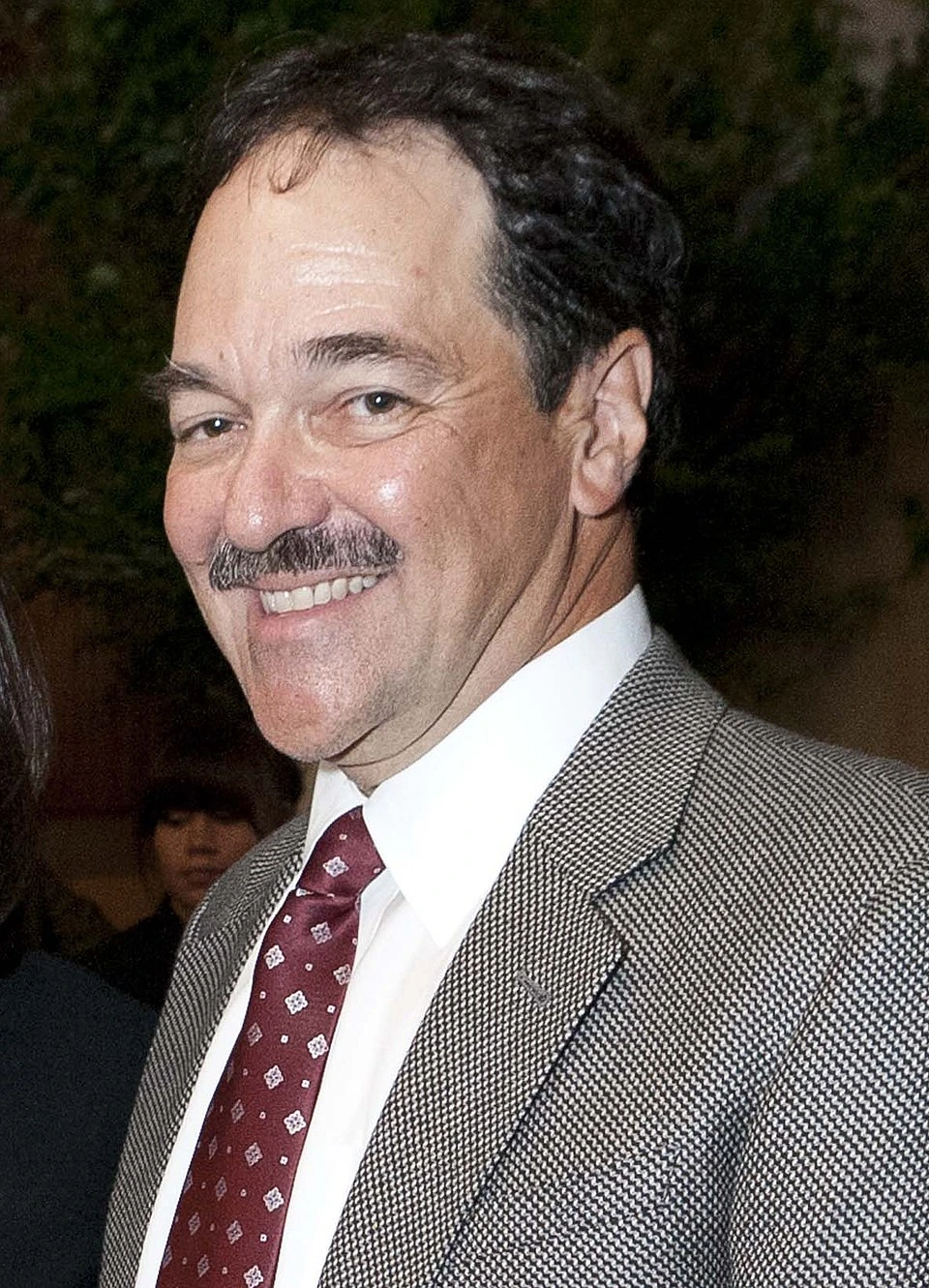
Who Frank Quattrone is (and which Frank we're talking about)

Frank P. Quattrone (born 1955) is an American investment banker who became one of the most prominent figures in technology finance during the dot-com era. He started his career at Morgan Stanley in 1977, eventually ran global technology banking groups at Morgan Stanley, Deutsche Bank, and Credit Suisse First Boston, and then founded Qatalyst Partners, a technology-focused corporate advisory firm, in March 2008. He served as its CEO until January 2016 and continues as executive chairman.
The name disambiguation matters here. This site covers a range of people named Frank and Frankie across different fields. If you came here searching for Frankie Quiones net worth, keep in mind that similar modeling methods are often used, but the person, career timeline, and source evidence will be completely different. Frank Quattrone is unambiguously the tech investment banker. He is confirmed as the same individual across FINRA's BrokerCheck records (listed under 'FRANK P. QUATTRONE'), federal court case documents from the obstruction case around 2000 to 2004, Forbes trial coverage, and Qatalyst's own team page. If you've landed here looking for a different Frank or Frankie, this isn't your person, but you'll find other profiles on this site covering figures from entertainment, sports, and public life. If you are specifically looking for Frankie Zulferino net worth, you may be seeing a similar estimation style, but you should verify the person and sources because net-worth figures are often misattributed.
What goes into the net worth estimate
Net worth isn't just income. Some readers search for “Frank Quattrone net worth” to compare how different assumptions change the final figure net worth estimate. For someone like Quattrone, the estimate layers several things together: career compensation (what he earned), retained wealth (what he kept after taxes and spending), investment returns on accumulated assets, and liabilities including legal penalties, regulatory fines, and restitution payments ordered by courts.
Most secondary net-worth sites skip the nuance and just anchor to the headline compensation figures from his Credit Suisse First Boston years. That's a starting point, not a destination. To get a more credible estimate, you have to also factor in what the courts and regulators took back, what a multi-year career interruption cost him in future earning capacity, and what Qatalyst would have generated during his leadership years.
- Peak annual compensation: reported at $36 million and then $120 million in consecutive years (late 1990s to 2000), based on trial testimony and Forbes reporting
- Court-ordered financial penalties: restitution of $9.2 million, a criminal fine of $90,000, and forfeiture proceedings (later vacated or amended by court order)
- Regulatory sanction: a $30,000 FINRA/NASD fine and a suspension from securities work from March 15, 2004 through March 14, 2005
- Career earnings post-2008: compensation from founding and leading Qatalyst Partners, a boutique advisory firm focused on major tech M&A transactions
- Investment/asset returns: unknown publicly, but typical for high-earning finance executives to have substantial investment portfolios built during peak earning years
How his career earnings translate to wealth

Quattrone's peak years were genuinely extraordinary. Forbes reported trial testimony showing he earned $36 million in one year at Credit Suisse First Boston, then $120 million the following year, which aligned with 2000, the height of the dot-com boom. Wikipedia's page also references roughly $120 million annually at his peak, drawing from the same trial record. Those are income figures, not wealth figures, and they're pre-tax. At 2000 federal income tax rates, the top marginal rate was 39.6 percent, which would have put the after-tax take on $120 million somewhere around $72 to $75 million for that year alone, before state taxes.
If you accumulate earnings across his full Credit Suisse First Boston tenure (he joined from Deutsche Bank in the mid-1990s), and include the years where compensation was in the tens of millions, the total gross income over that period could plausibly reach several hundred million dollars. Even with taxes, spending, and lifestyle costs, a high-earning Wall Street executive in that era who retained and invested a reasonable share of compensation could realistically hold assets in the low-to-mid nine-figure range by the time the boom ended.
Qatalyst added a second career chapter. The firm advises on major technology mergers and acquisitions, operating in a boutique model where senior partners take a meaningful share of advisory fees. While exact compensation from Qatalyst is not public, boutique advisory firms at that level generate substantial revenue on large transactions, and as founder and CEO, Quattrone would have been compensated accordingly through salary, profit sharing, and equity in the business.
Legal and regulatory events that shaped his financial picture
The legal chapter of Quattrone's story is one of the more documented parts of his financial history, and it's directly relevant to any net worth estimate. Around 2000 to 2001, federal investigators and the SEC began scrutinizing IPO allocation practices at Credit Suisse First Boston. Quattrone was charged with obstruction of justice and witness tampering, accused of encouraging employees to destroy documents while the firm was under investigation.
The first trial in 2003 ended in a hung jury. A retrial in 2004 resulted in conviction. At sentencing in 2004, Forbes reported that the criminal fine was $90,000. Separately, court records from the case (United States v. Croce) show that restitution of $9.2 million was ordered at sentencing in January 2004. Forfeiture proceedings initially included a money judgment of approximately $2.6 million, but court records indicate that figure was later amended and deleted from the judgment, so it should not be counted as a confirmed realized loss without docket verification.
On the regulatory side, FINRA's disciplinary records show a $30,000 fine and a suspension from securities industry work from March 2004 through March 2005. Later regulatory developments involved more severe restrictions, though he eventually had his industry registration reinstated, as covered by reporting around 2006.
The financial impact of the legal episode goes beyond the fines and restitution. His career was effectively on hold from roughly 2003 through 2007, a period where a top-earning investment banker of his caliber could have generated tens of millions more in compensation. That opportunity cost is real, even if it doesn't appear as a line item in any court order. His conviction was ultimately vacated on appeal, but the years lost in earning capacity during the interruption were not recoverable.
Why different websites quote different net worth numbers

If you've checked a few celebrity net worth sites before landing here, you've probably seen a range of figures, some low (around $50 million), some higher (toward $300 million or more). For a quick summary of the figure people search for, this is what estimates for Frankie Quattrone's net worth typically come out to. The reason they diverge is that none of them have access to Quattrone's actual financial records, and they're all using some version of the same approach: take the reported peak income, apply assumptions about retention and investment, and arrive at a number.
The problem is the assumptions vary wildly. Some sites anchor entirely to the $120 million peak year and work backward with generous tax and retention assumptions. Others discount more aggressively for the legal period and career gap. Very few explicitly account for the restitution obligation or the regulatory fine. And almost none of them distinguish between income (what he earned in a year) and net worth (what he holds today after all costs, obligations, and changes in value).
The more reliable approach is to treat any figure on a secondary net-worth aggregator site as a rough anchor, not a verified number. The sourcing on those sites is rarely transparent. When they cite a figure like '$200 million,' there's almost never a documented asset or disclosure behind it. On this site, we aim to be explicit about what's documented versus what's estimated and modeled.
How to verify or update the estimate yourself
If you want to go beyond our estimate and check for yourself, here are the concrete steps worth taking as of May 2026.
- Check FINRA BrokerCheck at brokercheck.finra.org. Search for 'Frank P. Quattrone.' You'll find his employment history, licensing timeline, and the full regulatory/disciplinary record including the 2004 suspension and fine. This is free and publicly accessible.
- Review FINRA's publicly posted adjudication decisions (the OHO decision documents, including case reference CAF030008) for the exact language on sanctions, fines, and suspension periods, available through FINRA's adjudication portal.
- Search federal court dockets for United States v. Croce (the case associated with Quattrone's criminal proceedings) through PACER (pacer.gov). Court records will show the final restitution amount, the criminal fine, and the status of any forfeiture orders, including whether the $2.6 million forfeiture figure was ultimately vacated as indicated in case summaries.
- Check SEC EDGAR (sec.gov/cgi-bin/browse-edgar) for any filings associated with Qatalyst Partners or related entities. If Qatalyst is registered as an investment adviser, Form ADV filings would disclose assets under management or advisement and firm structure, which can help contextualize the business's scale.
- Look for SEC Investment Adviser Public Disclosure (IAPD) records, accessible through adviserinfo.sec.gov, for any registered adviser entities tied to Quattrone or Qatalyst.
- For biographical and compensation context, go to primary sources: the Forbes articles from April and September 2004 (which contain the court-reported earnings figures and sentencing details) are more reliable than any secondary net worth site that cites them without attribution.
One important caution: forfeiture and restitution figures in early court filings are not always the final numbers. As the Croce case record shows, the initial forfeiture money judgment was later amended and removed from the final order. Always check the most recent docket entry, not just the first sentencing document, before treating a penalty figure as a confirmed net worth reduction.
Peak vs. today: a rough trajectory
| Period | Career Status | Key Financial Events | Net Worth Direction |
|---|---|---|---|
| Late 1990s to 2000 | Head of tech banking, Credit Suisse First Boston | Peak compensation: $36M then $120M in consecutive years (trial testimony) | Rapid accumulation |
| 2001 to 2004 | Under investigation, then indicted and convicted | Career on hold; restitution $9.2M ordered; criminal fine $90,000; FINRA fine $30,000 | Decline / earning gap |
| 2004 to 2007 | Conviction appealed, suspension period served | Securities industry suspension March 2004 to March 2005; conviction later vacated on appeal | Flat / constrained |
| 2008 to 2016 | Founder and CEO, Qatalyst Partners | Advisory fees from major tech M&A transactions; boutique firm model | Recovery / modest growth |
| 2016 to present (May 2026) | Executive Chairman, Qatalyst Partners | Reduced operational role; compensation structure unknown publicly | Estimated stable to modest growth |
Pulling this together, a reasonable evidence-based estimate for Frank Quattrone's net worth in May 2026 is roughly $100 million to $200 million. The lower end assumes aggressive discounting for legal costs, lost earning years, taxes on peak income, and uncertainty about Qatalyst distributions. The upper end assumes more favorable retention of peak-year earnings and investment returns over two and a half decades. Going above $200 million would require assuming near-perfect retention of dot-com peak income and strong compound returns, which is speculative without any supporting disclosure. Going below $100 million would require assuming the legal episode and career gap were far more financially devastating than the public record supports.
For context within this site's coverage, most of the Franks and Frankies profiled here built their wealth through entertainment, sports, or other public-facing careers with more visible income streams. Quattrone's wealth is built almost entirely in private finance, which means less visibility and more reliance on modeling from reported compensation. That makes his estimate less precise than someone whose earnings come through public contracts or recorded transactions, but the underlying career narrative is well-documented and the key data points are grounded in court records and credible financial journalism.
FAQ
Is Frank Quattrone net worth a verified number or just an estimate?
No. A credible net-worth estimate should start from documented income and penalties, then adjust for taxes, spending, and investment returns, but it will still be a model because Quattrone’s current asset statements are not public.
Why do some sources confuse Frank Quattrone’s peak earnings with his net worth?
Income figures like peak compensation from Credit Suisse First Boston are not the same as net worth. Your model should convert pre-tax income into after-tax retained wealth, subtract known obligations (fines, restitution), then add estimated growth on whatever was retained.
What assumptions make the biggest difference in Frank Quattrone net worth calculations?
A sensible range depends heavily on two unknowns, how much of the peak income was actually retained (after lifestyle and taxes) and how much of that was invested versus spent. Even small retention differences compound over decades.
How do analysts estimate Frank Quattrone’s wealth impact from founding Qatalyst Partners?
Qatalyst Partners compensation is not fully disclosed, so estimates must rely on boutique-advisory norms (salary plus profit sharing and founder equity value) rather than a publicly listed paycheck. This is one reason estimates tend to cluster, but not converge to one figure.
Should I rely on the first forfeiture or restitution amount I see in the filings when estimating net worth?
Court-ordered amounts can change. For forfeiture specifically, early filings may be amended, deleted, or superseded, so you should treat any forfeiture-related number as provisional until you confirm the final docket outcome.
How should restitution and fines be reflected in a net worth model, one-time reduction or something else?
Net worth is affected by liabilities and timing, not just totals paid. If restitution was paid from earlier retained assets, it reduces assets, but if it was paid from later income, the effect may look different than “penalty totals” alone.
Why does the ‘years lost’ period often change Frank Quattrone net worth estimates more than the fine amount?
Yes, the career interruption matters for the compound returns story. If peak-year earnings were not retained and invested, or if earning ability was reduced for several years, the final net-worth range shifts even if fines and restitution stay the same.
What red flags should I watch for when comparing different Frank Quattrone net worth websites?
If you’re comparing across sites, ignore the headline number and check whether they distinguish pre-tax income from after-tax retention and whether they explicitly include liabilities. Sites that anchor only to the $120 million year often produce overstated or less defensible ranges.
How can I build my own simple Frank Quattrone net worth scenario model?
If you’re trying to reproduce the estimate, treat it like a scenario model. Pick a retention rate for peak years, estimate investment returns after taxes, then subtract known penalties and lifestyle estimates, and run low, base, and high scenarios.
Does private-finance illiquidity make Frank Quattrone net worth harder to estimate accurately?
Yes. A net worth estimate should be consistent with the idea that wealth is private and illiquid, founder equity value in a private firm can be hard to price, and some assets may be concentrated in holdings that do not translate to easily observable market values.
Why do some net worth sites claim a single exact number for Frank Quattrone?
Yes, but they can also distort your interpretation. If someone cites an overly precise number, it is usually not backed by asset disclosures, so you should convert precision back into a range and focus on whether their penalty and retention assumptions are documented.