
Frank Viola's estimated net worth as of mid-2026 falls somewhere in the range of $8 million to $12 million. That range reflects his documented MLB salary history, post-career coaching income, speaking and appearance fees, and the reasonable accumulation and investment of earnings over a 40-plus year professional life. It is not a precise figure, because no verified public financial disclosure exists, but it is a defensible estimate grounded in what we actually know about his career earnings.
Frank Viola Net Worth Estimate: Salary, Career Earnings, and More

Marcus Holloway
18 Jun 2026
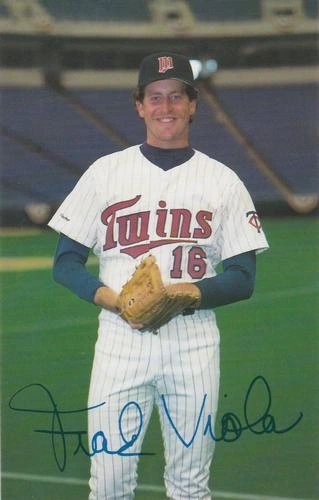
Which Frank Viola are we talking about?

When someone searches 'Frank Viola net worth,' they almost certainly mean Frank John Viola Jr., born April 19, 1960, the former Major League Baseball starting pitcher. He spent the bulk of his career with the Minnesota Twins (1982 to 1989), then moved on to the New York Mets (1989 to 1991), Boston Red Sox (1992 to 1994), Cincinnati Reds (1995), and Toronto Blue Jays (1996). He won the 1988 AL Cy Young Award and was named the 1987 World Series MVP after leading the Twins to a championship. That is the Frank Viola this article covers.
The disambiguation matters more than it might seem. There is a separate baseball player, Frank Viola III (born June 19, 1984), whose name turns up in searches and occasionally bleeds into the same net-worth aggregator pages. If you ever land on a profile page and the birthdate reads 1984 instead of 1960, you are looking at the wrong person. Stick to sources that anchor the identity with his April 19, 1960 birthdate, his Twins career, or his Cy Young Award. If you meant a different name, double-check the identity details before comparing estimates like frank pellegrino jr net worth.
Net worth at a glance
| Detail | Value |
|---|---|
| Full name | Frank John Viola Jr. |
| Born | April 19, 1960 |
| Estimated net worth (June 2026) | $8 million to $12 million |
| Confidence level | Moderate (no public financial disclosure) |
| Primary wealth drivers | MLB salaries, post-career coaching, speaking engagements |
| Peak earning period | 1988 to 1992 |
The $8M to $12M range is an informed estimate, not a verified number. It accounts for career baseball salaries, reasonable investment growth over three decades, and ongoing post-career income. It also factors in the lifestyle and family expenses typical of a public figure of his profile. The lower end of the range assumes more conservative spending and limited post-career income; the upper end assumes smarter investment of peak-era earnings and continued paid appearances and coaching roles.
How net worth estimates are calculated
For a retired athlete like Viola, estimating net worth means adding up what you can verify, making reasonable assumptions about what you cannot, and being honest about the gaps. If you are specifically looking for Frank Porcelli net worth, compare how different sites handle career income, investments, and verified documents net worth estimates. The primary inputs are documented MLB salary records, contract reporting from the time, and post-career income streams that leave some kind of public paper trail. From there, you apply basic assumptions about taxes (federal and state rates during his earning years), investment returns, and spending patterns consistent with his public profile.
The strongest evidence for Viola comes from public contract reporting. The Los Angeles Times documented a two-year, $2.9 million contract signed in January 1988, covering the 1988 season ($1.35 million) and 1989 season ($1.55 million), with potential performance bonuses of up to $450,000 per season and award bonuses of $100,000 per season. Baseball-Reference's salary records show blank" rel="noopener noreferrer">his 1989 Minnesota Twins salary at approximately $2,766,666. Beyond those anchors, we work with career earnings modeling and comparable player data from the same era.
Career earnings breakdown
Early career and rising salaries (1982 to 1987)

Viola broke into the majors with Minnesota in 1982 on a rookie-scale salary, likely in the range of $40,000 to $60,000 per year, typical for early 1980s MLB. As he developed into a reliable rotation starter, his pay rose gradually through arbitration. By the time he helped the Twins win the 1987 World Series and took home MVP honors, he was already earning well above league average, probably in the $700,000 to $1 million range for 1987. That World Series run was the financial turning point.
Peak earning years (1988 to 1992)
The documented 1988 to 1989 contract at $2.9 million base, with bonuses potentially pushing each season past $1.8 million to $2 million, confirmed his arrival as a top-tier earner. He then won the AL Cy Young Award in 1988, which strengthened his leverage heading into free agency. His move to the New York Mets mid-1989 came with a substantial new deal. Reports at the time placed his Mets contract in the neighborhood of $13 million over five years, which would have put his annual salary in the $2.5 million to $3 million range through the early 1990s. His Red Sox years (1992 to 1994) also came with solid contracts, though injuries began eating into both performance and leverage. Across roughly a decade of prime and near-prime earning, his cumulative MLB salary likely totaled somewhere between $25 million and $35 million before taxes.
Late career (1994 to 1996)
His stints with Cincinnati and Toronto were shorter, lower-paying stops as he worked to extend his career. Salaries in these years would have been significantly reduced compared to his Mets and Red Sox deals. By the time he retired after the 1996 season, his earning power on the field had largely wound down, but he had already banked the bulk of a substantial career.
Other income and wealth factors
Coaching and instruction

After retiring as a player, Viola built a second career in coaching. He served as the blank" rel="noopener noreferrer">Brooklyn Cyclones pitching coach (Class-A Mets affiliate) starting in 2011, then worked his way up to become a pitching instructor with the Mets organization for roughly eight seasons before departing in 2018. Minor league and coaching salaries in MLB organizations are not publicly disclosed, but a long-tenured pitching instructor at the major league affiliate level typically earns anywhere from $150,000 to $400,000 per year depending on the organization and role. It is not the salary of a starting pitcher, but it is real, steady income over a nearly decade-long stretch.
Broadcasting
Before settling into coaching, Viola did some broadcasting and color commentary work. MLB.com reporting noted that the experience of part-time broadcasting ultimately nudged him back toward coaching. Broadcasting work for former athletes can range from local radio spots to national cable deals, and the fees vary widely. Based on his profile and the regional nature of that work, it was probably a modest income stream rather than a major wealth driver.
Speaking, appearances, and endorsements

His official site, FrankViolaBaseball.org, actively markets him for business opportunities, personal appearances, speaking engagements, and endorsement inquiries. Speaker bureau listings on platforms like AthletesSpeakers.com and AAE Speakers confirm he participates in paid keynote and appearance bookings. For a World Series MVP and Cy Young Award winner with a recognizable name, speaking fees in the $5,000 to $20,000 range per event are plausible, though exact figures are not publicly disclosed. These engagements add ongoing income that supplements any pension or investment returns.
MLB pension
Players who accumulated enough MLB service time in Viola's era are entitled to the MLB pension, which is one of the most generous in professional sports. With more than ten years of service, Viola would qualify for the maximum pension benefit. As of recent years, the maximum annual MLB pension payout for a fully vested player can exceed $220,000 per year, paid for life. That is a significant, low-visibility wealth component that many net-worth aggregators fail to factor in properly. If you are specifically tracking Frank Viola's estimated figure, the franke previte net worth comparison is sometimes discussed alongside other former MLB earners net-worth aggregators.
Financial timeline: how his wealth changed over time
- 1982 to 1986 (Early career): Modest MLB salaries, building financial foundation. Net worth likely under $1 million after taxes and living expenses.
- 1987 to 1989 (World Series MVP to Cy Young): Salary jumps significantly. The 1988 contract alone pushed annual earnings past $1.5 million. Net worth likely grows to $3 million to $5 million range depending on investment decisions.
- 1990 to 1993 (Mets peak and early Red Sox years): Highest annual salaries of his career, likely $2.5 million to $3 million per year. With smart financial management, net worth could have climbed toward $10 million to $15 million in gross accumulated earnings before taxes.
- 1994 to 1996 (Declining career): Lower salaries, injury-related lost time, and transition uncertainty. Net worth likely held relatively stable or grew modestly.
- 1997 to 2010 (Post-playing, pre-coaching gap): Broadcasting and personal ventures; limited documented income. This is the period where investment decisions matter most. Poorly managed, wealth can erode; well managed, it compounds.
- 2011 to 2018 (Coaching with Mets organization): Steady coaching income, speaking fees, and MLB pension contributions add to stability. Net worth likely settles into the $8 million to $12 million range.
- 2019 to present: Post-Mets coaching chapter, continued speaking and appearance work, full MLB pension in effect. Net worth estimate holds in the same range absent major undisclosed developments.
Why estimates online conflict, and how to check them today
If you have already Googled 'Frank Viola net worth,' you have probably seen figures ranging from $4 million to $20 million across different sites. That spread is not random. Net-worth aggregator sites like blank" rel="noopener noreferrer">Celebrity Net Worth use proprietary models that they do not explain, and they update irregularly. Some sites have apparently pulled data for the wrong Frank Viola entirely, confusing him with Frank Viola III (born 1984) or simply recycling old numbers. Others inflate figures to get clicks. None of these sites publish methodology, so there is no way to know how they landed on their numbers.
The more reliable approach is to build the estimate yourself from primary evidence. Start with Baseball-Reference's salary data for his documented contracts, then layer in public contract reporting from credible outlets (the LA Times 1988 contract reporting is a good anchor). Cross-reference with any official site content, speaker bureau listings, and documented coaching roles through MLB.com news archives. You will not get a perfect number, but you will get a grounded range you can defend. If you want the most useful snapshot, compare this grounded estimate to Frank Vallelonga net worth figures from multiple sources before accepting any single number grounded range you can defend.
Practical steps to verify or refine the estimate
- Search Baseball-Reference's salary leaders and player page for Frank Viola (born April 19, 1960) to confirm documented salary figures by season.
- Search the Los Angeles Times or newspaper archives for contract reporting using terms like 'Frank Viola contract Twins 1988' or 'Frank Viola Mets deal.'
- Check MLB.com's news archive for coaching role announcements (Brooklyn Cyclones 2011, Mets Triple-A coaching, Mets instructor departure 2018) to document post-career income timeline.
- Visit FrankViolaBaseball.org to confirm current appearance and speaking activity as a proxy for ongoing income.
- Consult SABR's BioProject page for Frank Viola to confirm you have the right person before trusting any aggregator number.
- When reading any net-worth aggregator page, verify the birthdate (April 19, 1960) and career teams (Twins, Mets, Red Sox) match before accepting the figure.
How Viola's wealth compares to peers in this database
Among the figures tracked on this site, Frank Viola sits in a comfortable middle tier for sports figures. He earned more than most career public servants or media personalities like Frank Vascellaro or Frank Valentini, whose wealth profiles reflect television industry salaries rather than elite athlete contracts. He is roughly comparable to sports-adjacent public figures who built wealth through a combination of peak-career earnings and post-career brand work. His wealth trajectory is not as dramatic as some athletes who built business empires after playing, but it is also more stable and documented than many, thanks to the strong paper trail that MLB contract history provides.
The bottom line: Frank Viola built a real, solid fortune through a long and decorated MLB career capped by a Cy Young Award and a World Series MVP. The $8 million to $12 million range as of June 2026 is a grounded, honest estimate. It could be higher if his investments performed well, lower if early spending was aggressive. But anyone telling you he is worth $25 million or under $3 million should be pressed hard for their sourcing, because neither end holds up against the documented evidence.
FAQ
How can I tell if a net worth number I found online is for Frank Viola (born 1960) or Frank Viola III (born 1984)?
Check the birthdate and career summary. The correct Frank Viola is April 19, 1960, and a Twins pitcher who won the 1988 AL Cy Young Award and 1987 World Series MVP. If the page mentions a different birthdate, different teams, or a different career era, treat the net worth figure as unreliable for the 1960-born player.
What part of the estimate is usually overstated on net-worth aggregator sites for players like Viola?
The investment and lifestyle components are the biggest weak spots. Many sites assume high returns or large post-career business income without showing evidence, which can inflate numbers. A more defensible approach is to start from documented MLB salaries and only then add post-career income streams where you can point to specific roles (coaching, speaking, appearances).
If his MLB career earnings were around $25 million to $35 million before taxes, why doesn’t that automatically translate to net worth near that amount?
Because net worth is after taxes and years of spending. Payroll income gets reduced heavily by federal and state taxes during peak earning years, and professional athletes also face ongoing living costs, family expenses, and the reality that compensation is spread over time rather than all at once. Net worth further depends on whether the remaining cash was invested conservatively or aggressively.
Do MLB pension benefits meaningfully change the net worth range, or are they too small compared with career salary?
They can still matter because the pension is paid for life and tends to be more predictable than speaking or coaching income. For a player with enough service time (more than ten years is typically “maximum” territory), the annual payout can be substantial enough to shift the range, especially when combined with investment income from earlier savings.
Could coaching and speaking income push the estimate higher than $12 million?
It is possible but not likely to be the primary driver. Coaching roles are usually steady but not at “top contract” levels, and speaking fees vary widely by event and demand. To move the net worth above the upper end, you would generally need evidence of strong investment performance or long-term business income that is not captured in salary-only models.
What’s the best way to build my own estimate without guessing too much about investments and spending?
Use a “base layer” approach. Add documented MLB salaries from contract records, then add only conservative ranges for post-career coaching and speaking based on the types of roles he held. For investments, instead of assuming unusually high returns, use modest growth assumptions and keep the final figure as a range rather than a single number.
Why do different websites report radically different numbers, like $4 million versus $20 million?
Methodology opacity and identity errors are common. Some sites reuse older values, confuse different people with similar names, or apply internal valuation formulas without publishing inputs. If a site cannot explain its assumptions or shows no connection to documented career earnings, treat the figure as entertainment rather than a grounded estimate.
If I want to verify his maximum MLB pension eligibility, what detail should I look for?
Look for evidence of MLB service time, because pension tiers are tied to years of credited service. The article’s logic assumes he qualified for maximum or near-maximum benefits due to his service length. If you find a claim that conflicts, the first thing to check is the player’s credited years rather than the annual payout number.
Are endorsement deals or private business ventures included in most net worth estimates for Frank Viola?
Often not in a well-documented way. While he markets business opportunities and does paid appearances, most public net worth models do not have verifiable data for private endorsements or business equity. That means estimates may undercount them if they exist, or overcount them if a site assumes they are large without evidence.
How should I interpret “mid-2026” wording when looking at a current net worth figure?
It means the estimate is anchored to a time window, but net worth can shift with investment returns, expenses, and any new paid engagements. If you see the number presented without a date or with a date that moves frequently, the figure is probably being updated by a model rather than by new verified financial disclosures.