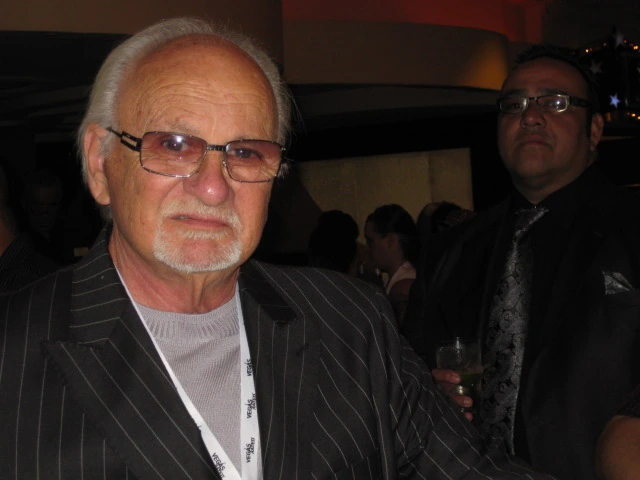
Frank T. Sinito is the founder and CEO of The Millennia Companies, a Cleveland-based real estate development and property management firm he built from a single 14-unit apartment purchase in 1985. Based on publicly available information about the scale of Millennia's portfolio and his role as founder and majority stakeholder, a reasonable estimated net worth range for Frank Sinito today is somewhere between $50 million and $150 million, though pinning down a tighter figure is genuinely difficult because Millennia is a privately held company with no publicly disclosed valuations or ownership filings.
Frank Sinito Net Worth: Estimates, Sources, and How to Verify

Marcus Holloway
28 Apr 2026

Who Frank Sinito is and why people search his net worth

Frank T. Sinito graduated from Cleveland State University with a BA in Economics and a minor in Finance, and got his start in real estate the same year he finished school, purchasing that 14-unit multifamily development in Northeast Ohio in 1985. A decade later, in 1995, he formally founded Millennia Housing Management and Millennia Housing Development, the twin pillars of what became The Millennia Companies. Today the firm operates as one of the larger affordable and workforce housing developers in the United States, with a portfolio spanning multiple states and thousands of units.
Searches for his net worth tend to spike whenever Millennia makes news, whether that's a major acquisition, a new affordable housing deal, a federal tax credit project, or occasional scrutiny from local media or housing advocates. He's also a sufficiently prominent regional business figure in Northeast Ohio that general curiosity about his personal wealth is common among people researching the Cleveland real estate scene. It's worth noting that a name search for 'Frank Sinito' can occasionally pull up unrelated results, so confirming you have the right person (the Millennia Companies CEO, not a historical figure with a similar name) matters before drawing any conclusions.
Current estimated net worth range and what's included
The estimated $50 million to $150 million range reflects the probable value of Sinito's equity stake in The Millennia Companies, including its development arm and management company, as well as any direct real estate holdings he may maintain personally. Affordable housing development firms of Millennia's scale, managing and developing several thousand units with ongoing Low Income Housing Tax Credit (LIHTC) deals, typically carry enterprise valuations in the hundreds of millions of dollars. Even a partial equity position in a company of that size produces a significant personal net worth figure.
What the estimate almost certainly does not capture, because the data isn't public, includes the exact equity split if there are other partners or investors, any personal debt obligations tied to development guarantees, the precise market value of individual assets, and any compensation drawn as salary or distributions over the years. Public records do show that Frank T. Sinito has served as Treasurer for at least one nonprofit (Newport Harbor Association Inc., per IRS Form 990 data on ProPublica), which suggests civic engagement but doesn't materially affect the wealth picture.
How net worth estimates are calculated for private real estate figures

For publicly traded company executives, net worth math is relatively straightforward: you take disclosed equity stakes, add known compensation from proxy filings, and factor in public stock values. For a private real estate developer like Sinito, the process is messier and relies on indirect signals. Analysts and researchers typically look at the size and occupancy of the company's managed portfolio, comparable transaction values for similar affordable housing operators, any disclosed debt at the project or company level, and market multiples for property management businesses.
The 1985 entry point is actually a useful anchor. A developer who entered Northeast Ohio multifamily real estate in 1985 and grew steadily enough to launch a dedicated development and management company by 1995 had roughly a decade of asset accumulation before the formal corporate structure existed. Forty-plus years of compounding equity in real estate, particularly in a low-income housing sector that benefits from consistent federal tax credit subsidies, can produce substantial wealth even without blockbuster individual deals. That context supports the higher end of the estimated range.
Why different websites show different numbers
If you've landed on multiple celebrity net worth aggregator sites and seen figures ranging from a few million dollars to well over $100 million, that variance isn't surprising and doesn't mean anyone has insider information. Most of these sites use the same method: find a rough public data point, apply a multiplier based on industry comparables, and publish a number with confident-sounding language. For a private company CEO whose firm doesn't file public financials, those starting data points are often thin or even borrowed from unrelated people with similar names.
Some sites conflate the company's estimated revenue or asset value with the founder's personal net worth, which inflates figures dramatically. A good reminder is that mixing up company value with frank sesno net worth can inflate numbers just like some sites do when they use the wrong starting point net worth profiles across a wide range of public figures. Others anchor to a single outdated news story or press release. A few simply copy numbers from competitor sites, creating a false sense of consensus. The honest position is that no outside source has verified Sinito's personal balance sheet, and any figure that claims precision down to the dollar should be treated skeptically.
How to verify the estimate yourself

The most reliable verification workflow for a private developer like Sinito starts with public property records. County auditor and recorder databases in Cuyahoga County (and any other Ohio counties where Millennia has operated) will show deed transfers, assessed values, and ownership entities. Searching 'Millennia' and 'Sinito' together in those databases gives you a picture of at least the Ohio-anchored real estate footprint. This won't capture out-of-state holdings or equity held through complex partnership structures, but it's a grounded starting point.
- Search Cuyahoga County Auditor and Recorder records for properties tied to 'Millennia' or 'Sinito' to establish a real estate baseline.
- Check ProPublica's Nonprofit Explorer using 'Frank T Sinito' to surface any IRS Form 990 filings that list him as an officer, which can reveal governance roles and sometimes compensation.
- Look up Ohio Secretary of State business filings for Millennia Housing Management and Millennia Housing Development to identify registered agents, officers, and any related entities.
- Search HUD and state housing finance agency award databases for LIHTC allocations to Millennia-affiliated entities, which gives a sense of development volume over time.
- Cross-reference press coverage in Cleveland.com, Crain's Cleveland Business, and local real estate trade publications for any disclosed deal values, portfolio size announcements, or company revenue estimates.
- If you find a net worth figure on a celebrity aggregator site, trace its original source. If it cites no primary document, treat it as an estimate built on assumption, not reporting.
Wealth timeline: key events that shaped Sinito's finances
Tracing Sinito's financial arc chronologically tells a cleaner story than a single snapshot. His trajectory breaks into a few distinct phases.
| Period | Key Event | Financial Impact |
|---|---|---|
| 1985 | Purchased a 14-unit multifamily property in Northeast Ohio | Initial capital deployment; beginning of real estate equity accumulation |
| 1985–1994 | Decade of portfolio growth as an individual investor/operator | Estimated equity buildup across Northeast Ohio multifamily assets |
| 1995 | Founded Millennia Housing Management and Millennia Housing Development | Formalized the business structure; positioned for institutional-scale LIHTC deals |
| Late 1990s–2000s | Expansion of affordable housing portfolio using federal LIHTC programs | Recurring developer fees and ownership equity in subsidized projects; relatively recession-resistant income stream |
| 2010s | Continued national expansion; Millennia becomes a recognizable affordable housing brand | Enterprise value growth; likely significant increase in personal net worth tied to company value |
| 2020s | Ongoing development activity; periodic media coverage of tenant conditions and regulatory scrutiny at some properties | Reputational and potential regulatory risk; no confirmed material financial loss reported publicly as of April 2026 |
The LIHTC program is worth understanding as a wealth driver here. Developers who syndicate tax credits on affordable housing projects earn developer fees upfront (typically 10 to 15 percent of project costs) and often retain residual ownership stakes. Over a career spanning forty-plus years and dozens of projects, those fees and equity residuals accumulate substantially. That mechanism, more than any single transaction, likely explains the bulk of Sinito's estimated wealth.
Making sure you have the right Frank Sinito
The name Frank Sinito is uncommon enough that confusion with other public figures is unlikely, but it's worth a quick confirmation check before you dive deep into research. The Frank T. Sinito you're looking for is consistently identified across his company website, LinkedIn, and the about.me profile as the founder/CEO of The Millennia Companies, based in Valley View, Ohio (a suburb of Cleveland). His educational background at Cleveland State University and his 1985 real estate entry point are consistent anchors across multiple independent sources. If any source you're consulting doesn't match these markers, you may be looking at a different person or outdated information.
If you're doing broader research into real estate figures or simply landed here while searching for someone else in the Frank/Frankie name space, this site covers net worth profiles across a wide range of public figures with those names, including people in media, sports, entertainment, and business. If you are using this kind of net worth research approach to compare different public figures, you may also want to look at pastor frank santora net worth as a related example. Related profiles worth exploring include figures like Frank Sorrentino and Frank Santorelli, who come from entirely different fields but represent the kind of comparative wealth research this database is built for. Frank Sorrentino net worth is another example of how people compare wealth figures across different industries, even when the individuals have no direct connection. If you searched for Frank Sinito and suspect you may have meant a different name, checking adjacent profiles is a practical next step.
The bottom line on Frank Sinito's net worth
The honest answer is that Frank T. Sinito's net worth is not publicly documented in any verified filing, and anyone claiming a precise number is working from inference, not disclosure. The $50 million to $150 million range is a reasonable, methodology-grounded estimate based on the scale of The Millennia Companies, four decades of real estate equity accumulation, and the economics of LIHTC development. If you're trying to reconcile these estimates with what you might see elsewhere, a direct search for frank isola net worth can offer a related comparison point, even though it covers a different individual. It could be higher if the company's enterprise value is toward the top of comparable private affordable housing operators. It could be lower if significant debt obligations, partnership dilution, or other liabilities exist that aren't visible from the outside. What it almost certainly isn't is either negligible or in the billions. For a long-tenured founder of a mid-to-large regional real estate company, this range reflects the realistic zone.
FAQ
Why do net worth sites give such different numbers for Frank Sinito net worth?
Most sites are estimating indirectly from the size of Millennia or from rough industry multiples, then presenting a single “precision” figure. For a private company, the missing piece is the founder’s exact equity ownership and debt load, so two sites can reach very different totals even if they start from similar public signals.
Is Frank Sinito net worth the same as the value of The Millennia Companies?
No. A company’s enterprise value (properties plus financing plus business operations) is not the same as personal net worth. Your estimate should focus on Sinito’s equity stake and distributions, then adjust for any personal guarantees or liabilities that reduce his personal balance sheet.
How can I confirm I have the right Frank T. Sinito before trusting an estimate?
Cross-check at least two anchors that should match for the same person: role (founder and CEO of The Millennia Companies) and location (Valley View, Ohio, near Cleveland). If a source lists different education, a different industry, or a different employer timeline than the CEO profile, treat it as a likely mix-up.
What public records are most useful for approximating his personal real estate footprint?
Start with county auditor and recorder databases for Ohio counties where Millennia operates. Look for deed transfers and the ownership entity name behind the property (for example, LLCs or partnership names). That helps you identify which assets are plausibly connected, though it still may not reveal out-of-state holdings or indirect equity.
Why doesn’t the net worth estimate include a more exact number?
Because Millennia does not publicly disclose valuations or ownership filings, there is no authoritative dataset for founder equity, partnership splits, or personal guarantees. Without verified balance sheet information, any tight number would be speculative rather than evidence-based.
What LIHTC-related factors are most likely to drive wealth for someone like Frank Sinito?
For LIHTC development companies, developer fees earned upfront (commonly a mid-teens percentage range of project costs) and any residual ownership interests after completion are key wealth drivers. Over decades, smaller fee streams plus residual equity can compound more than any one headline acquisition.
How do hidden debts or guarantees change the net worth picture?
Even if a founder benefits from project equity, personal net worth can be reduced by personal guarantees on loans, contingent liabilities from development phases, or guarantees tied to tax-credit compliance. These items often do not appear clearly in public summaries, which is why the estimates are ranges.
Can I use Millennia’s portfolio size to compute a more accurate Frank Sinito net worth estimate?
Portfolio size alone is not enough. You also need to infer equity intensity (how much ownership the developer retains versus partners), leverage levels (debt on the projects), and any management-only versus development ownership. A better approach is to triangulate using comparable transaction economics for similar affordable housing operators, then apply a conservative ownership assumption.
What mistake should I avoid when comparing “revenue” and “net worth” for Frank Sinito?
Do not equate company revenue or project cost flow with personal wealth. Revenue can be largely transactional, while net worth depends on equity, retained residuals, and liabilities. This is a common error in aggregator methodology that can inflate figures.
If I see a number that claims to be exact, what’s the best way to sanity-check it?
Treat “exact to the dollar” claims as unreliable for a private-company founder. Check whether the site explains its starting data (verifiable equity stake, verified property ownership, or disclosed financials). If it does not show a method tied to records, default back to a wide range.