
Frank Prisinzano is an East Village restaurateur and chef who built a small empire of Italian restaurants in Manhattan. As of June 2026, his net worth is estimated somewhere between $1 million and $10 million, with the most credible middle-ground figure landing around $3 to $5 million when you factor in his restaurant assets, his product business, and the legal liabilities that have chipped away at his earnings over the years. If you are trying to gauge the food boss Frank Prisinzano net worth, the best approach is to treat most figures as estimates and focus on the assets and liabilities that drive the range. The wide gap between published estimates reflects the difference between optimistic brand-value projections and the messy reality of running independent restaurants in New York City.
Frank Prisinzano Net Worth: Who He Is and Estimated Wealth

Which Frank Prisinzano Are We Talking About?

There is one Frank Prisinzano who consistently shows up in searches: Frank T. Prisinzano, a Queens-born chef and restaurateur who became the public face of a cluster of beloved East Village restaurants. He is not a politician, a crime figure, or a corporate executive. His biographical background, confirmed through branding materials from Prisinzano Products, notes that he was born in Queens to Frank Sr. and Amalia Panella. His public identity is entirely restaurant-centered, and every financial trail connected to his name leads back to that world. If you are searching for someone with the same name in another context, this is almost certainly not the same person.
The Best Net-Worth Estimate Right Now
Published estimates swing wildly. If you are specifically hunting the frank perozo net worth figure, you will run into the same issue of unverified sources and wide estimation ranges net-worth estimate. Cine Net Worth puts the figure at around $10 million as of 2025, while Voxhour estimates roughly $1 million. Neither figure comes with audited financial statements or verified asset disclosures, so both should be treated as educated guesses rather than confirmed data.
Frank Pesce net worth figures are often estimated the same way, using public records and brand assumptions when audited numbers are unavailable. The $10 million figure likely reflects an optimistic brand valuation of the restaurant cluster and Prisinzano Products combined. The $1 million figure probably undersells the underlying real value of his business holdings but may reflect a conservative take on liquidity and cash on hand after legal costs.
A realistic middle estimate, accounting for restaurant equity, product revenue, and ongoing legal exposure, sits in the $3 to $5 million range as of June 2026. Confidence level: moderate at best. Without public business filings or tax records, any figure here is an informed estimate, not a certainty.
If you are specifically trying to nail down chef frank proto net worth, the most reliable approach is still to treat all published numbers as informed guesses and compare the same underlying sources discussed here chef frank proto net worth (related estimate).
How Frank Prisinzano Built His Money

Prisinzano's financial story is essentially the story of three restaurants that became East Village institutions over roughly three decades. Frank Restaurant on Second Avenue was the anchor. Lil' Frankie's Pizza on First Avenue became a neighborhood staple known for its wood-fired oven. Supper, described by NYC.com as a Northern Italian wine bar in the East Village, rounded out the trio. These three restaurants, operating under separate corporate entities (Kitchen Table, Inc. doing business as Frank; Just an Oven Corp doing business as Lil' Frankie's; and Raguboy Corp doing business as Supper), formed the core of his income base for years.
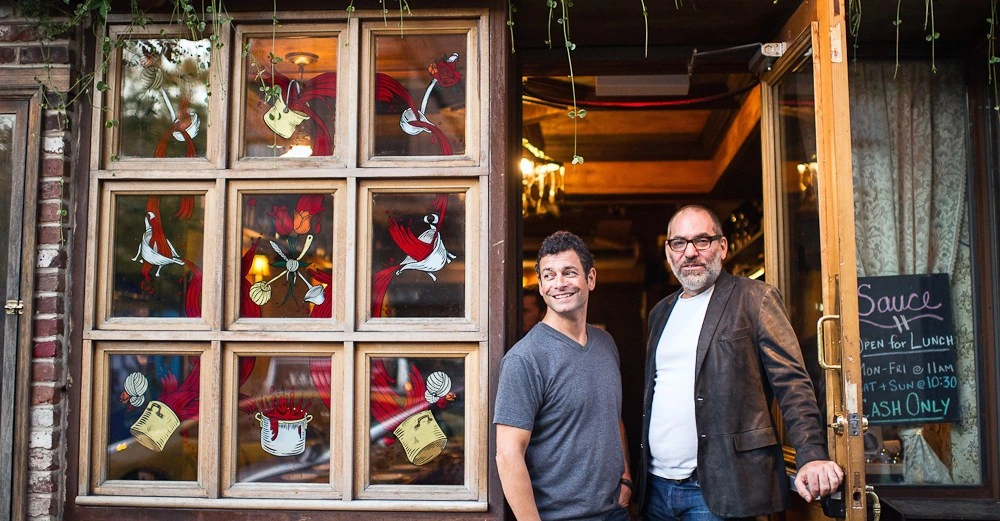
He also expanded the brand. Around 2011 and 2012, he partnered with Rob DeFlorio to open Sauce on the Lower East Side, adding a fourth concept to the restaurant portfolio. The Sauce project showed ambition to scale beyond the original East Village footprint, though it was a collaborative venture rather than a solo enterprise.
Beyond the restaurants, Prisinzano developed a product line under the Prisinzano Products brand, which extended his identity as a food personality into retail. He also built a public-facing persona through social media, where his pasta-making tutorials attracted a large following and reinforced the brand. Community-oriented activities, like teaching pasta-making classes for children at PS 41, were well-documented in local press and served as additional brand-building.
Eater NY’s profile also highlights his public-facing role teaching pasta-making classes for local children at PS 41 while he runs his East Village restaurant business teaching pasta-making classes for children at PS 41. None of these secondary activities likely generate major income on their own, but they sustain the marketing value that supports restaurant traffic and product sales.
Breaking Down the Wealth: Assets and Liabilities
The asset side of Prisinzano's net worth is concentrated in his restaurant businesses and product line. Three long-running Manhattan restaurants, even if leased rather than owned outright, carry meaningful goodwill and equipment value. Depending on annual revenue (which is not publicly disclosed), each restaurant could be worth anywhere from a few hundred thousand to over a million dollars in a sale scenario. The product business adds brand licensing and retail value on top of that. If he holds any real estate equity in New York City, that would significantly boost the figure, but there is no publicly confirmed evidence of property ownership tied to his name.
The liability side is harder to ignore. Court records and Eater NY reporting confirm that Prisinzano and his restaurant entities have faced wage-theft lawsuits dating back to at least 2009. A 2022 federal lawsuit filed in the Southern District of New York named Frank Restaurant, Lil' Frankie's, and Supper as defendants alongside Prisinzano personally. According to the lawsuit narrative reported by Eater NY, prior settlements in earlier wage-theft incidents totaled more than $300,000. Legal fees, settlement payouts, and the reputational drag of repeated litigation all represent real financial costs that reduce net worth over time. The 2025 federal docket also shows continued litigation involving his restaurant entities, meaning legal exposure has not fully resolved.
| Component | Estimated Value | Confidence |
|---|---|---|
| Restaurant business equity (Frank, Lil' Frankie's, Supper) | $2M – $6M | Low-moderate |
| Prisinzano Products brand and retail | $500K – $1M | Low |
| Social media and media presence value | Marginal / indirect | Low |
| Real estate holdings | Unknown / unconfirmed | Very low |
| Legal liabilities and settlements (cumulative) | ($300K+, ongoing) | Moderate |
| Net estimate range | $1M – $10M (midpoint ~$3M–$5M) | Moderate |
How the Financial Picture Has Shifted Over Time

The early 2000s were the foundation years. Prisinzano launched Frank Restaurant and then Lil' Frankie's, establishing himself in the East Village food scene before the neighborhood's full gentrification peak. By 2003, The Guardian was referencing his restaurant cluster in the context of East Village cultural life, a sign that he had genuine community standing early on.
The mid-2000s through early 2010s were growth years. The addition of Supper and then Sauce expanded the portfolio and the brand. A 2010 Community Board 3 meeting documented his attorney presenting on his behalf for licensing matters, which reflects the kind of civic engagement a restaurateur with real assets and a real stake in the neighborhood would pursue.
The first major financial setback came in 2009 when the initial wave of wage-theft allegations surfaced. Settlements that followed over the next several years cost more than $300,000 in total, according to the 2022 lawsuit. That is a meaningful hit for an independent restaurateur operating without the deep pockets of a corporate parent.
The 2022 federal lawsuit marked another pressure point. Filed in April 2022 in the Southern District of New York, it named him and all three core restaurant entities as defendants. Combined with the broader stress that the COVID-19 pandemic placed on independent restaurants in New York City between 2020 and 2022, this was a difficult period financially. The social media following and product business likely provided some income stability during this stretch, but the legal drag was real.
By 2025 and 2026, the restaurants appear to still be operating, which is itself a sign of financial resilience. Ongoing litigation shown in 2025 federal dockets suggests the legal chapter is not closed, but the fact that the businesses have survived nearly two decades in Manhattan's brutally competitive restaurant market is a meaningful signal about the underlying value of the brand.
Why the Published Numbers Are So Far Apart
The gap between $1 million and $10 million is not unusual for independent restaurateurs, and it mostly comes down to methodology. If you are comparing how estimates move for similar chef-restaurateurs, you can also review frank zombo net worth as another adjacent example of why numbers diverge. Sites like Cine Net Worth often use brand valuation models that account for social media reach, media appearances, and projected product revenue alongside restaurant equity. These models can produce inflated numbers because they treat a large Instagram following as if it were a liquid asset. Sites that anchor their estimates more conservatively, like Voxhour's $1 million figure, may be focusing on cash flow and ignoring the accumulated equity in a multi-restaurant operation.
There is also no public disclosure requirement for private restaurant owners in New York. Unlike publicly traded companies, Prisinzano is not required to file financial statements, report revenues, or disclose real estate holdings. Researchers working from the outside can only triangulate from business licensing records, court filings, community board documents, and industry benchmarks for restaurants of similar type and size in comparable Manhattan neighborhoods. That is a lot of educated guesswork, which is why the honest answer here is a range rather than a single figure.
It is worth noting that Prisinzano is not the only chef-restaurateur in this space whose net worth is difficult to pin down. Comparable figures in the food-media world, including other chef-entrepreneurs who blend restaurant ownership with product lines and social followings, tend to show the same wide spread between optimistic and conservative estimates. The methodology problems are industry-wide, not unique to this case.
How to Verify This and What to Check Next
If you want to pressure-test the estimates, the most useful sources are publicly accessible. The Justia federal docket is searchable and will show you the current status of litigation involving Prisinzano and his restaurant entities. Look for cases naming Raguboy Corp, Kitchen Table Inc., and Just an Oven Corp to track any new settlements or judgments. New York State's business entity database (available through the Department of State) will show you the registered status and filing history of each corporate entity tied to the restaurants.
blank" rel="noopener noreferrer">Manhattan Community Board 3 meeting minutes, which are published publicly, have historically documented license applications and other civic matters involving his restaurants. These are useful for confirming that specific locations are still active and operating under current permits. NYC Department of Consumer and Worker Protection records may also show any resolved or pending wage-related violations.
For the product business side, Prisinzano Products has its own web presence, and retail listings on major grocery or specialty food platforms can give you a rough sense of distribution scale, which is a proxy for revenue volume. None of this will give you a certified net-worth figure, but it will help you build a more grounded picture than any single celebrity-net-worth site can provide.
If the chef-restaurateur angle is what drew you here, it is worth knowing that other food-world figures with similar public profiles face the same estimation challenges. The financial trajectories of chef entrepreneurs who combine restaurant ownership with media presence tend to follow recognizable patterns: early hustle, brand growth, legal or operational complications, and a net worth that looks different depending on which slice of the business you are measuring. Prisinzano's story fits that pattern closely.
FAQ
Why is Frank Prisinzano net worth often reported as a huge range, $1 million to $10 million?
For private restaurateurs, most “net worth” figures are modeled from assumptions, not audited statements. Small changes in assumed restaurant equity, whether leases are treated as owned value, and how legal exposure is netted out can swing the midpoint dramatically.
Does the estimate include the three restaurant entities (Frank, Lil' Frankie's, Supper) or just one business?
Many published figures blur this, but the more accurate approach is to treat them as separate corporate entities and then aggregate only the parts that plausibly contribute equity or goodwill. Wage-theft cases and settlements also attach to specific defendants, so liabilities should be mapped at the entity level.
If the restaurants are “operating,” does that mean his net worth is likely at the high end?
Not necessarily. Survival in Manhattan often reflects cash-flow management, but equity value can still be limited if assets are heavily encumbered, the businesses are leased, or profits are reduced by litigation costs and ongoing operating expenses.
How much do wage-theft lawsuits actually affect net worth estimates?
They matter most through two channels, settlement payouts (including past totals) and ongoing legal risk (future fees, judgments, compliance costs). Even when settlements seem “small” relative to the business, repeated incidents can reduce brand value and increase insurance or attorney costs.
Could Frank Prisinzano net worth be driven by product sales more than restaurant ownership?
It could contribute, but product lines usually add value in a different way than restaurant equity. Retail listings can indicate distribution scale, yet net worth impact depends on margins, licensing terms, and whether the product business is profitable after marketing and operating costs.
What is the best way to tell if there is real estate equity involved?
Look for proof at the property-record level rather than assume based on prominence. The article notes no publicly confirmed evidence tied to his name, so any “property included” net-worth claim is likely assumption unless property records or ownership disclosures can be tied to his entities.
How can I pressure-test celebrity-net-worth sites that use brand valuation models?
Check whether the model converts social media reach into realistic cash-flow or liquidity. A practical test is to compare assumed revenue growth to what typical NYC independent restaurants can sustain, then see if the estimate still holds after subtracting plausible legal and operating costs.
Is Frank T. Prisinzano the same person as any other “Frank Prisinzano” appearing in court or business records?
They are likely the same in the restaurant-centered context, but you should verify matches using middle initial and entity names. In databases, a mismatch in spelling or a different middle initial can lead to combining assets and liabilities from different people.
What court dockets should you track to get a more current view of liabilities?
Track cases by the named corporate defendants, such as Raguboy Corp, Kitchen Table Inc., and Just an Oven Corp, and then follow the latest procedural status, settlements, or judgments. Ongoing docket activity is a stronger signal of unresolved risk than older headlines.
How do leases vs owned premises change net worth calculations for restaurant owners?
If key locations are leased, the “value” in net worth models should focus more on business goodwill, brand, equipment, and transferable interests rather than real estate equity. Overvaluing leased establishments is a common reason estimates drift upward.
What does “confidence level: moderate at best” mean for my interpretation?
It means the estimate is directionally useful but not decision-grade. If you use it for anything important, treat the midpoint as uncertain and build a scenario range that accounts for ongoing litigation outcomes and whether the restaurants have meaningful equity above what debt and lease structures require.
If I want a narrower estimate, what extra data should I look for first?
Start with entity status and filings in the state business database, then cross-reference active permits in Community Board 3 minutes and consumer and worker protection records. After that, map liabilities from the most recent wage-related docket entries to avoid relying on stale settlement narratives.