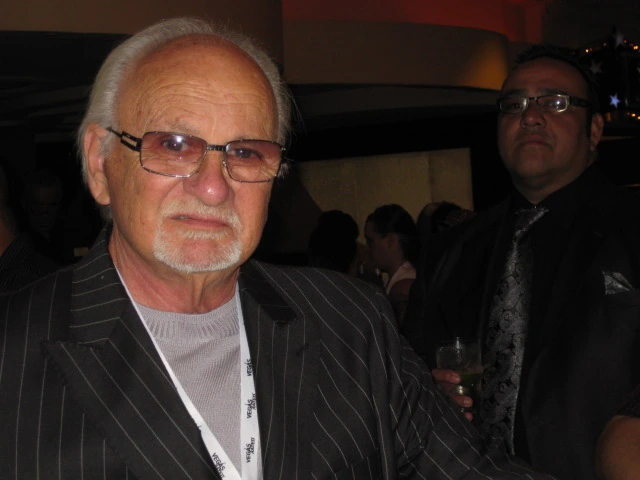
Frank Scibelli's estimated net worth as of June 2026 is in the range of $10 million to $20 million, with the most defensible midpoint sitting around $12 to $15 million. That figure is built primarily on the value of his remaining restaurant portfolio under FS Food Group, his share of proceeds from the $21 million sale of Bad Daddy's Burger Bar in 2015, and more than three decades of operating income from multiple Charlotte-area concepts. There is no public disclosure of his personal finances, so this is an informed estimate, not a confirmed number.
Frank Scibelli Net Worth: Estimate, Sources, Timeline

Marcus Holloway
11 Jun 2026
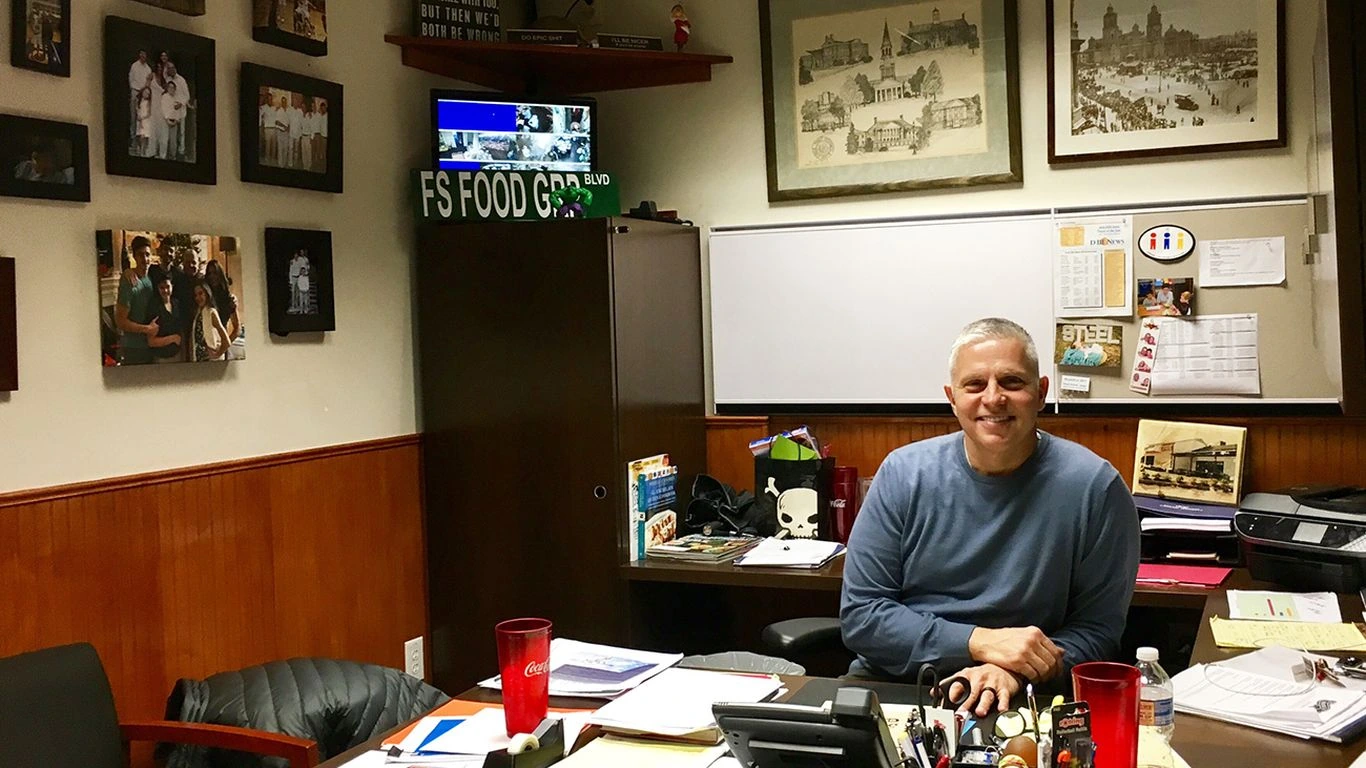
Who Frank Scibelli actually is
Frank Scibelli is a Charlotte, North Carolina-based restaurateur. If you are trying to gauge Frank Scibelli’s net worth, this background helps explain why it is estimated rather than publicly confirmed. His full legal name is Joseph Francis Scibelli, but he goes by Frank professionally. blank" rel="noopener noreferrer">He grew up in Springfield, Massachusetts, earned both an undergraduate degree and an MBA from Wake Forest University, and opened his first restaurant, Mama Ricotta's, in Charlotte in August 1992 when he was 27 years old. Today he is the founder and CEO of FS Food Group, which operates multiple concepts across the Carolinas including Midwood Smokehouse, Paco's Tacos and Tequila, YAFO Kitchen, Little Mama's Italian, and Calle Sol Latin Café. The NCRLA-hosted Restaurant Activity Report PDF for September 23 indicates FS Food Group is led by CEO Frank Scibelli and discusses blank" rel="noopener noreferrer">planned new openings, supporting the report’s timeframe operational control. He also ran Cantina 1511 and Bad Daddy's Burger Bar before eventually exiting both.
He is not a celebrity in the traditional sense, which is exactly why his net worth is rarely discussed publicly. He does not appear on reality television or carry a massive social media following. His public visibility comes almost entirely from local Charlotte press, restaurant industry trade coverage (Restaurant Business Online, US Foods features), and occasional lifestyle profiles like an Axios "How I Work" interview. That relative anonymity is part of why a careful identity check matters here: there are other prominent Franks in business and public life, and this article is specifically about the Charlotte restaurant entrepreneur.
How the net worth estimate is put together
Because Scibelli runs a private company, there are no SEC filings, no public earnings reports, and no court-ordered asset disclosures that spell out his personal wealth. Every estimate here is built from public proxies: reported transaction values, business scale indicators, and industry benchmarks. Here is how those pieces stack up.
- The $21 million Bad Daddy's sale (April 2015, reported by both Restaurant Business Online and Axios) is the single hardest data point. Scibelli was an owner, not the sole owner, so his personal take would have been a portion of that figure, likely a meaningful one given his founding role.
- FS Food Group's multi-concept portfolio is the main ongoing asset. Independent casual dining restaurants in the Carolinas typically carry valuations of two to four times EBITDA. A group of five to eight active concepts generating moderate annual profits could be worth $5 to $12 million on the open market.
- Mama Ricotta's has been operating continuously since 1992, making it a mature, presumably cash-flowing asset with established real estate relationships and brand equity in Charlotte.
- Business registration records, Better Business Bureau filings, and industry directory listings (including Growjo) all confirm Scibelli's operational control of these entities, which supports the asset attribution.
- No personal real estate records, investment portfolios, or other disclosed assets outside the restaurant group are factored in because none are publicly available.
Confidence level: moderate. The $21 million transaction is confirmed by multiple credible sources. The current portfolio value is estimated using industry multiples and is more uncertain. A realistic range is $10 million to $20 million, and I would not push significantly above $20 million without evidence of additional liquidity events or disclosed assets.
Wealth timeline: how the money built up (and where it hit bumps)
1992 to early 2000s: the foundation years
Scibelli opened Mama Ricotta's at 27 with a single Italian concept in Charlotte. During this period, the net worth would have been minimal and highly leveraged. Restaurant startups carry heavy debt, thin margins, and high failure risk. Surviving and stabilizing Mama Ricotta's through the 1990s was itself a significant financial achievement, but it would not have produced substantial personal wealth on its own.
Mid-2000s to 2014: multi-concept expansion
Over roughly a decade, Scibelli built out a portfolio of concepts including Bad Daddy's Burger Bar, Cantina 1511, and Midwood Smokehouse. Each new concept required capital investment but also created multiple income streams and compounding brand equity. By the early 2010s, he was running what the US Foods feature describes as a group with about 33 years of collective operating history by the time of publication. This is when the wealth likely started accumulating meaningfully, driven by operating cash flow across multiple profitable units.
2015: the Bad Daddy's sale
Good Times Restaurants acquired Bad Daddy's Burger Bar for $21 million in April 2015. This is almost certainly the single largest liquidity event in Scibelli's career to date. Depending on his ownership stake and how much debt was attached to the entity at the time of sale, his personal proceeds could have ranged from a few million dollars to something approaching $10 million or more. This event likely represents the sharpest upward step in his personal net worth.
2015 to present: portfolio management and the Cantina 1511 setback
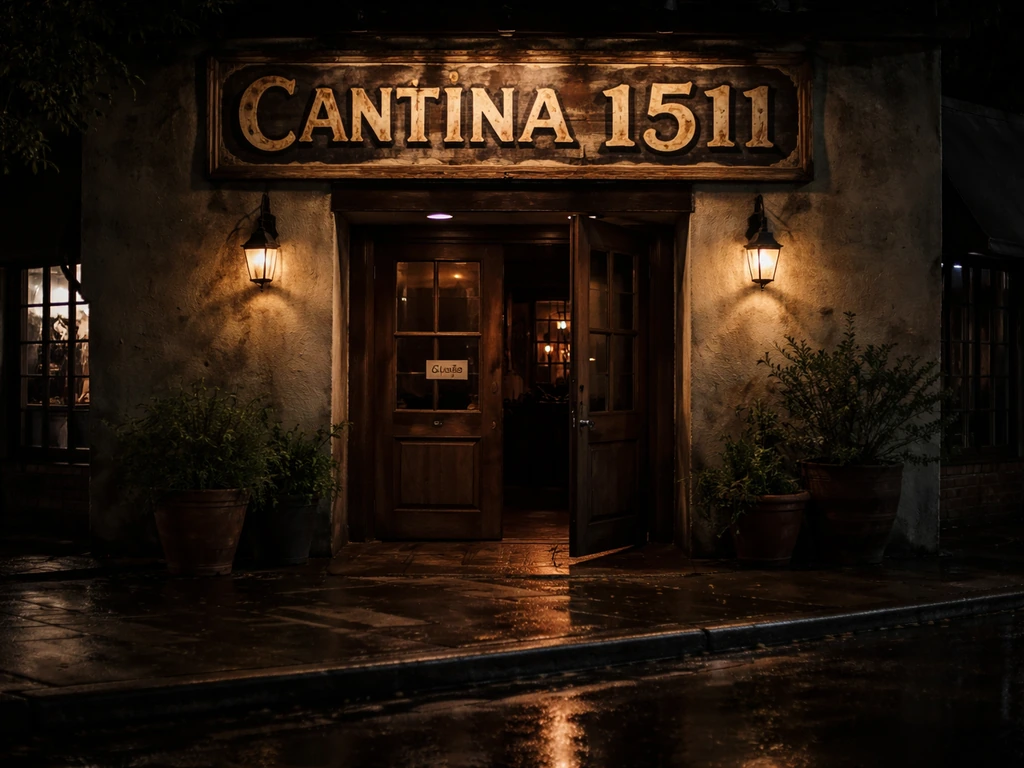
After the Bad Daddy's sale, Scibelli continued building FS Food Group with newer concepts. However, Cantina 1511 ran into serious trouble. The Charlotte Observer reported that the brand attempted to sell three of its locations and filed for Chapter 11 bankruptcy protection. The sale attempts fell through and the case was eventually dismissed. Bankruptcy filings are public documents that can reveal debts, creditor claims, and asset values, and this filing would have represented a material liability. It is a reminder that restaurant group wealth is illiquid and cyclical. The Cantina 1511 distress likely cost Scibelli in both direct capital and management bandwidth, acting as a meaningful downward pressure on his net worth during that period.
Income, assets, and liabilities: what is working for and against the estimate
| Category | Key Items | Financial Direction |
|---|---|---|
| Income sources | Operating revenue from Mama Ricotta's, Midwood Smokehouse, Paco's, YAFO, Little Mama's, Calle Sol | Positive, ongoing |
| Major liquidity event | Bad Daddy's sale at $21 million (2015, partial ownership) | Large one-time positive |
| Exited concept | Cantina 1511 (started, then sold/wound down) | Mixed: operational income followed by losses |
| Liabilities | Cantina 1511 Chapter 11 filing, creditor claims, restaurant leases, operational debt | Negative, eroded some post-2015 gains |
| Assets | FS Food Group portfolio, Mama Ricotta's brand equity (since 1992), catering operation | Positive, illiquid |
| Unknown factors | Personal real estate, investment accounts, other private holdings | Unverifiable without disclosure |
The biggest structural risk to Scibelli's wealth is the same one facing every multi-unit independent restaurateur: concentration. Almost all of his estimated net worth is tied to the performance of private restaurant businesses in a single geographic market. Restaurant assets are notoriously hard to liquidate at full value, and they are sensitive to labor costs, food inflation, and consumer spending. The Bad Daddy's sale was a partial exception because it created a clean cash exit, but most of the remaining portfolio does not offer that kind of liquidity.
Controversies and legal events with financial impact
The most significant documented financial controversy in Scibelli's career is the Cantina 1511 Chapter 11 bankruptcy filing. The Charlotte Observer reported that the company attempted to sell its three locations to another operator, those sales fell through, and the bankruptcy case was ultimately dismissed rather than resolved through a restructuring plan. A Chapter 11 filing, even a dismissed one, signals that the business had accumulated debts it could not service, which means creditors were owed money, lease obligations were likely in default, and legal and advisory fees were incurred in the process. The practical financial impact on Scibelli personally depends on how the entities were structured and whether any personal guarantees were attached to Cantina 1511's debts, which is common for restaurant operators securing leases and equipment financing. If personal guarantees existed, the exposure could have been material.
There is no publicly documented criminal history, regulatory enforcement action, or fraud-related financial event tied to Frank Scibelli. The legal matter here is a commercial bankruptcy, which is a business event, not a criminal one. It affects the net worth estimate by reducing the value of the Cantina 1511 assets and potentially creating personal liability, but it does not place him in the crime or misconduct category that some other Franks in public life occupy.
How his wealth compares to other notable Franks
Scibelli's estimated $10 to $20 million sits comfortably in the range of successful regional business operators rather than celebrity-level wealth. For context, other Franks documented on this site vary enormously. Someone like Frank Cascio, who built a career in entertainment management and brand relationships, or Frank Castagna, whose wealth is tied to retail real estate, would likely operate in different wealth tiers and through entirely different asset classes. Frank Scozzafava and Frank Cozzolino represent still other profiles. Frank Cozzolino net worth is another example of how these figures for private business owners often rely on public proxies rather than confirmed disclosures. If you are also trying to understand Frank Scozzafava net worth, compare how each estimate is supported by verifiable transactions versus assumptions about private assets. The common thread is that estimating wealth for any non-publicly-traded Frank requires the same transparency-first methodology: anchor to confirmed transactions, apply realistic multiples to private assets, and be explicit about what is not known. Scibelli's wealth is real, operationally grounded, and traceable through a clear 30-plus-year career arc. It is just not the kind of headline-grabbing fortune that gets independently verified in real time.
Where to verify or update this figure today
If you want to check or update the estimate yourself as of June 2026 or beyond, here are the most useful sources and methods.
- North Carolina Secretary of State business filings: Search for FS Food Group, Mama Ricotta's Inc., and related entities at sosnc.gov to confirm which companies are active, who the registered agent is, and whether any dissolution or new entity filings have been made.
- Federal bankruptcy court records (via PACER): The Cantina 1511 Chapter 11 case should be on file in the Western District of North Carolina. PACER is the official portal and charges per-page fees, but it gives you the actual creditor list, asset schedules, and any personal guarantee disclosures if Scibelli was a named party.
- Mecklenburg County Register of Deeds: Property records in Charlotte's home county can show whether Scibelli holds real estate personally, what it was purchased for, and whether it carries liens or mortgages.
- Restaurant Business Online and Nation's Restaurant News: Both trade publications track multi-unit restaurant operators and sometimes report on valuations during acquisitions or expansions. Search for FS Food Group coverage to find any post-2022 transaction news.
- Axios Charlotte and the Charlotte Observer: Local business press has covered Scibelli's career most consistently. A news search on both sites for his name or FS Food Group will surface any recent expansions, closures, or financial developments.
- Wake Forest University and Johnson and Wales University: Both institutions have public alumni materials referencing Scibelli that can help confirm identity details if you are doing deep background verification.
- Good Times Restaurants SEC filings (post-2015): Since Good Times is a public company that acquired Bad Daddy's, their annual reports and 10-K filings from 2015 onward would have disclosed the $21 million acquisition price and any related seller information, which is useful for confirming the transaction details.
No celebrity net worth aggregator site is going to give you a verified number for Frank Scibelli. Those sites typically do not cover private regional restaurateurs, and when they do, the figures are usually sourced from other estimate sites rather than primary documents. For someone like Scibelli, the trail of public business records, trade press coverage, and court filings is actually more reliable than anything a net worth list will tell you.
FAQ
How can I tell whether the $10 million to $20 million Frank Scibelli net worth estimate is overstated or understated?
Start with the $21 million Bad Daddy’s Burger Bar sale, then sanity-check whether reported ownership percentage and any debt at the entity level were likely material. If you find credible indications he owned a small slice or the sale proceeds went largely to lenders, it pushes the midpoint down. If ownership percentage looked higher and leverage at sale was low, the range can reasonably skew upward.
Why are there no direct numbers for Frank Scibelli net worth in the way there are for public-company executives?
Because FS Food Group is private, his personal wealth is not typically broken out in SEC-style reporting. Even when a company has revenue or profit, that does not equal his distributable income, since private operators often retain cash for expansion, service debt, and cover working capital needs.
Does the Cantina 1511 bankruptcy filing automatically mean Frank Scibelli had a personal financial loss?
Not automatically. The outcome depends on how the company was structured (entity-level risk versus personal guarantees). Personal guarantees are common in restaurant leasing, equipment financing, and sometimes location-level debt, but without guarantee documentation you cannot assume the impact fully landed on him personally.
What counts as “net worth” here, liquid cash versus business value?
The estimate is mainly a proxy for equity value in operating entities plus any cash-like proceeds from major exits. Restaurant businesses often have limited liquidation value compared to their book or sales-time valuations, so the “worth” can be meaningful on paper but hard to convert to cash quickly.
Could Frank Scibelli have additional wealth not captured by the restaurant portfolio value?
Yes. Common missing buckets include retirement accounts, personal real estate, investment accounts, and any equity in entities not fully covered by public reporting. Since those are not disclosed in detail, the article’s range stays conservative and does not assume large non-restaurant holdings without evidence.
If another restaurant sale happens in the future, how would it likely affect Frank Scibelli net worth?
A sale that creates clean, debt-reduced proceeds would be a direct upward step, similar in logic to the Bad Daddy’s transaction. In contrast, a sale that transfers the business while retaining liabilities or triggering lease restructuring might result in smaller personal cash-out even if the headline valuation looks high.
How should I interpret “confidence level: moderate” for Frank Scibelli net worth?
It usually means the range is anchored to at least one reasonably verifiable transaction, but the rest depends on assumptions like current portfolio valuations, his ownership percentages, and how much leverage sits inside each entity. The midpoint can be directionally useful, but exact personal net worth would require disclosures that do not exist publicly.
What are the biggest mistakes people make when estimating Frank Scibelli net worth?
The biggest errors are treating restaurant brand revenue as owner profit, assuming enterprise value equals personal equity, and ignoring leverage and debt attached to locations. Another frequent mistake is averaging aggregator estimates without checking whether they cite primary transaction values or only repeat other guesswork.
Is it possible his net worth dropped significantly after the Cantina 1511 troubles even if the case was dismissed?
Yes. A dismissed case can still reflect real financial strain incurred during the period leading up to dismissal, including legal fees, operational disruption, and sunk capital. Even if liabilities were ultimately resolved differently, there can be a lagging hit to cash flow and reinvestment capacity.
How can I update the Frank Scibelli net worth estimate after June 2026 with real signals?
Look for new confirmed liquidity events (partial or full sales, refinancing with disclosed terms, notable equity transactions), then compare those to any public indicators of improved or impaired performance in the portfolio. Also watch for additional court filings that could change leverage assumptions, since those often alter the equity-value-to-cash mapping.