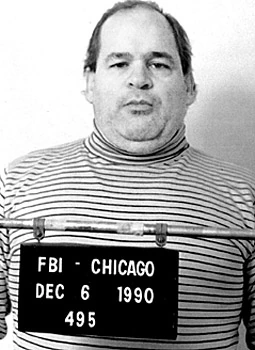
The most defensible estimate for Frank Montecalvo's net worth, based on available reporting tied to Bayshore Recycling Corp. and its associated companies in New Jersey, sits somewhere in the range of $20 million to $100 million. The upper end of that range comes from a single non-authoritative net worth aggregator site that throws out a $100 million figure without corroborating primary documents. The lower end is my own conservative read based on the scale of the business, its industry standing, and the kind of assets typically associated with a multi-decade family-owned waste and recycling operation. Confidence in any specific number here is low-to-moderate at best, because Frank Montecalvo is a private business owner, not a publicly traded CEO or entertainment celebrity with transparent income disclosures.
Frank Montecalvo Net Worth: Best Estimate, Sources, and Range

Which Frank (or Frankie) Montecalvo are you actually looking for?

There are two distinct people who show up when you search the Montecalvo name in a financial or notable-person context, and mixing them up is easy if you are not paying attention.
The first is Frank Montecalvo, the New Jersey business owner who co-founded and built Bayshore Recycling Corp. (and its sister company Montecalvo Disposal Services Inc.) in Keasbey/Woodbridge, New Jersey. He runs the operation alongside his wife Valerie Montecalvo, who serves as president of Bayshore while Frank has held the vice president role. Industry publications like Recycling Today, Construction and Demolition Recycling, and Waste Today have covered this family and their business repeatedly over many years. If you are searching for Frank Montecalvo net worth in the context of business wealth, real assets, or a family enterprise, this is almost certainly who you mean.
The second is Frankie Montecalvo, a professional motorsports driver who competes in the IMSA WeatherTech SportsCar Championship and has a dedicated driver profile on both the IMSA website and Lexus motorsports pages. Lexus also maintains a dedicated motorsports driver page for Frankie Montecalvo, reinforcing that this Frankie is a separate motorsports identity a dedicated driver profile on both the IMSA website and Lexus motorsports pages. This is a completely separate individual. Frankie the racing driver has his own professional trajectory, sponsor relationships, and financial picture that has nothing to do with waste management or recycling in New Jersey. If your search was specifically for Frankie Montecalvo the race car driver, the wealth framework, income sources, and research approach are entirely different from what follows below.
The remainder of this article focuses on Frank Montecalvo of Bayshore Recycling, since that is the identity consistently tied to net worth discussions online. Where relevant, I will note where the motorsports Frankie connection could create confusion.
Best estimate today: the range and how confident to be
The only specific dollar figure I have found attached to Frank Montecalvo (Bayshore) is approximately $100 million, published on a celebrity-style net worth aggregator page with the headline describing him as "the visionary behind Bayshore Recycling." That type of site typically reverse-engineers estimates from business scale, industry revenue benchmarks, and sometimes just rounds up from rumors. There is no public filing, no sale disclosure, no court record, and no verified interview where Frank himself or a credible financial journalist pins down a number.
| Estimate Source | Stated Figure | Confidence Level | Why |
|---|---|---|---|
| Net worth aggregator site (SuperYachtFan-style) | $100 million | Low | No primary documents; methodology opaque; common inflation pattern for private business owners |
| Conservative industry-based estimate (this analysis) | $20M – $60M | Moderate | Based on business age, scale, industry margins, and comparable private recycling firm values |
| Frank or Valerie Montecalvo public statements | Not publicly disclosed | N/A | Private individuals; no verified self-reported wealth figure found |
My working estimate for 2026 is somewhere between $20 million and $80 million, with the most probable range being $30 million to $60 million when you account for business equity, real property likely associated with a large-scale C&D (construction and demolition) recycling facility, and personal assets accumulated over roughly four decades in the industry. I would not stake much on the $100 million ceiling without corroborating evidence. Private business owners in regional recycling and disposal routinely have wealth that looks large on paper (equipment, land, facility infrastructure) but is illiquid and tied up in the enterprise itself.
How net worth estimates for private business owners actually get made

For celebrities, athletes, or publicly traded executives, net worth estimates are grounded in verifiable data: disclosed salaries, SEC filings, publicly reported endorsement deals, property records, and court documents. For a private business owner like Frank Montecalvo, the process is messier and the uncertainty is real.
The main inputs researchers use for someone in Frank's position are: estimated business valuation (typically a multiple of annual revenue or EBITDA for waste and recycling businesses), publicly accessible property records, any disclosed business transactions like acquisitions or facility expansions, industry award coverage that hints at business scale, and general benchmarks for comparable private companies in the same sector. Waste and recycling businesses in the mid-Atlantic region with decades of operation can range from a few million dollars to several hundred million depending on volume, contracts, and owned infrastructure.
The key distinction that matters for interpreting any number: net worth is not cash in the bank. For a business like Bayshore Recycling, the bulk of Frank's estimated net worth likely sits in business equity, equipment value, and real estate, all of which are relatively illiquid. If you asked him to write a check for $50 million tomorrow, he almost certainly could not do it. That does not mean the wealth is not real; it means it is tied to ongoing operations.
The financial timeline: how this wealth was built
Frank Montecalvo's financial story starts in the early 1980s when he was running a heavy highway construction company handling paving, milling, utility installations, and storm drainage. That is not glamorous work, but it is exactly the kind of blue-collar infrastructure business that builds durable, relationship-based wealth over time. It also gave him direct exposure to the construction debris and material-handling side of things, which set the table for what came next.
Bayshore Recycling Corp. and Montecalvo Disposal Services Inc. (MDS) grew out of that background, with Frank and Valerie building the family of companies into a recognized name in New Jersey's construction and demolition recycling sector. By 2009, Recycling Today was covering Bayshore's facility upgrades, describing Frank as vice president and Valerie as president. The business was large enough to be investing in new mixed C&D processing systems, which signals meaningful capital availability and a growing operational footprint.
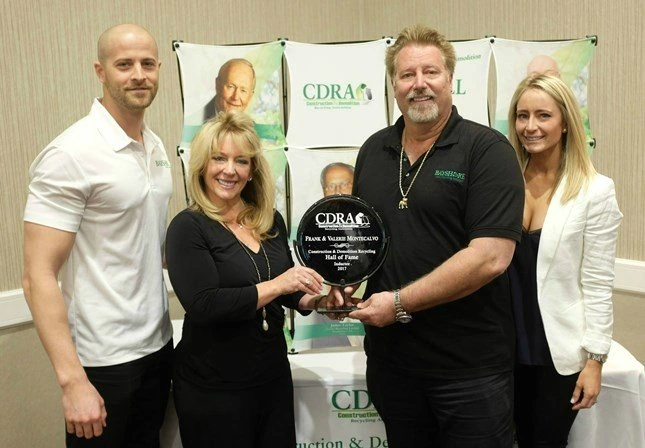
By 2014, Recycling Today ran a feature profile describing Frank and Valerie as a husband-and-wife team running a real operation, with Frank preferring to be out in the field overseeing work while Valerie managed the office. That division of labor is a classic privately held family business structure, and it suggests the company had enough complexity to require two distinct management roles. Industry recognition continued to accumulate: the Bayshore family of companies received a 2019 Distinguished Leadership Award covered by Waste Today, and both Frank and Valerie were cited by name as owners. Industry awards covered by CDRA during C&D World name Bayshore owners and leaders, reinforcing the “Frank and Valerie Montecalvo” context for the family business CDRA honors awards recipients during C&D World. Awards like that do not go to small operators.
Putting it together: roughly 40-plus years of building a vertically integrated waste, disposal, and recycling business in one of the most active construction markets in the northeastern United States (New Jersey, near the New York metro area) is a credible path to multi-million-dollar wealth. The trajectory is consistent with gradual, compounding business growth rather than a single liquidity event like a company sale or IPO.
What could reduce the number: liabilities, setbacks, and unknowns
This is the part most net worth sites skip, and it matters. Several factors can erode or significantly complicate the apparent wealth of a private business owner in the recycling and waste sector.
- Business debt and equipment financing: Heavy recycling and construction equipment is expensive, and most operators carry ongoing debt against their machinery, vehicles, and facility infrastructure. That debt is subtracted from gross asset value to get actual net worth.
- Environmental regulatory exposure: C&D recycling businesses in New Jersey operate under significant state and federal environmental oversight. Any past violations, cleanup orders, or consent decrees can impose ongoing costs and liabilities that quietly reduce wealth.
- Real estate market shifts: If facility land and property make up a significant chunk of the asset base, shifts in commercial real estate values in New Jersey directly affect the estimate.
- Legal and settlement risk: No public court records related to Frank Montecalvo personally have been cited in available reporting, but this is always a potential factor for any business owner in a heavily regulated sector.
- Estate and succession planning: As the business matures, how it is structured for inheritance and ownership transfer can affect both the taxable estate value and the practical liquidity available to the family.
- Revenue concentration risk: If major contracts with large construction or demolition clients represent a disproportionate share of revenue, losing one or two of them can reduce business value significantly.
None of these factors are confirmed problems for the Montecalvo family based on available public reporting. But any honest net worth estimate has to acknowledge them as real variables, not just footnotes.
When sources conflict: how to verify and what to trust
The fundamental challenge with Frank Montecalvo's net worth is that the most specific number online ($100 million) comes from a site that does not disclose its methodology, does not cite primary financial documents, and is part of a broad category of pages that frequently inflate wealth estimates for private figures because dramatic numbers get more traffic. That pattern is common across the entire genre of celebrity and business owner net worth sites. I have seen the same dynamic with figures like Frank Canova, Frank Newsom, and others in adjacent profiles on this site: a single aggregator number floats around and gets repeated without verification. I also flag common issues seen in other Frank Newsom net worth profiles, where aggregator figures can be repeated without solid documentation.
To actually verify or challenge a net worth figure for someone like Frank Montecalvo, here is the hierarchy of sources to use, ranked from most to least reliable:
- New Jersey public property records: These are searchable and will show real estate owned by Frank or Valerie Montecalvo or their business entities, giving you at least a partial asset picture.
- Business entity filings with the New Jersey Division of Revenue: These confirm that the business entities exist and are in good standing but typically do not disclose revenue or asset values for private companies.
- Trade press coverage (Recycling Today, Waste Today, Construction and Demolition Recycling): These are the most credible editorial sources that have covered the Montecalvos, and they give you scale signals even if they do not publish financials.
- Industry award citations and association memberships: Organizations like CDRA (Construction and Demolition Recycling Association) that have honored Frank and Valerie indirectly validate business stature.
- Court records (PACER for federal, New Jersey courts online portal): Search for any civil or regulatory actions that would suggest financial stress or liability exposure.
- General net worth aggregator sites: Use these only as a starting hypothesis, not a conclusion. Treat any figure from these sources as unverified until corroborated elsewhere.
If two sources conflict, always weight the primary business-press source over the aggregator site. If a trade magazine like Recycling Today describes a facility expansion that implies tens of millions in capital investment, that is more informative than a site simply asserting a $100 million number.
Practical next steps to find the most current and credible picture
If you want to build the most current estimate of Frank Montecalvo's net worth and keep it updated, here is what I would actually do: For more context, you can also review claims about Frank Canova net worth and compare them with the business-focused details discussed here.
- Search the New Jersey property records database for 'Montecalvo' and 'Bayshore Recycling' in Middlesex County (Keasbey/Woodbridge area) to identify owned real estate and its assessed values.
- Run a Google News search for 'Bayshore Recycling' and 'Montecalvo' filtered to the past 12 months to catch any recent business news, expansions, sales, or regulatory actions.
- Check the CDRA (Construction and Demolition Recycling Association) website for any recent award mentions or leadership citations that might include updated business context.
- Search PACER (federal court records) and the New Jersey courts e-filing system for any civil litigation, bankruptcy filings, or consent decrees involving Frank Montecalvo, Valerie Montecalvo, Bayshore Recycling Corp., or Montecalvo Disposal Services Inc.
- Look up New Jersey business entity records for Bayshore Recycling Corp. and MDS to confirm current status, registered agents, and any major structural changes like dissolution or acquisition.
- If a major transaction like a sale or merger has occurred, search for press releases or trade press coverage since that would be the most significant update to any wealth estimate.
- Revisit this profile periodically: private business wealth can change substantially with a single liquidity event, and the Montecalvo family's business is mature enough that a sale or generational transfer is a real possibility that would create public records.
The bottom line is this: Frank Montecalvo of Bayshore Recycling is a credible multi-decade business builder in a capital-intensive sector, and a net worth in the tens of millions is well within reason. The $100 million figure circulating online is plausible at the high end but should be treated as unverified until a primary source confirms it. For readers who landed here searching for Frankie Montecalvo the motorsports driver instead, the research path is entirely different and starts with IMSA's official driver records, racing contract structures, and sponsorship disclosures rather than anything in the waste management industry.
FAQ
Why do net worth sites claim $100 million when there are no public filings?
Not necessarily. For owners of recycling and disposal companies, a large share of “net worth” is tied to enterprise equity (owned equipment, facility value, contracted customer relationships) rather than cash. Unless you have evidence of major sales, dividends, or loan paydowns converting equity into liquidity, a high net worth number can overstate how much money is easily available.
Could Frank Montecalvo’s net worth estimate be off because his assets might be split across Bayshore and Montecalvo Disposal?
Yes, it can swing the estimate materially. If Bayshore and Montecalvo Disposal are both held personally or through related entities, equity and real estate may sit across multiple structures, making the value harder to map cleanly to one person. A reliable update would require confirming ownership stakes and any known asset transfers between the companies.
Is Frank Montecalvo’s net worth estimate the same as his yearly earnings?
Do not treat the range as “annual income.” The article’s approach is about implied wealth from business scale and likely asset ownership. To estimate income, you would need compensation disclosures, payroll or benefits reporting tied to the companies, or credible interviews that specify his salary, draws, or distributions.
How can I avoid mixing up Frank Montecalvo with Frankie Montecalvo (the racing driver) when searching net worth?
One common pitfall is confusing Frank Montecalvo the New Jersey business owner with Frankie Montecalvo the IMSA racing driver. They are separate people, so you should not reuse the same wealth framework, companies, or search terms when checking claims.
What types of evidence would most improve confidence in a Frank Montecalvo net worth estimate?
Look for business-press signals of capital depth, such as documented facility expansions, major equipment upgrades, or large permitted operations. Those are more useful than repeated aggregator numbers. A single trade publication describing investment scale typically carries more weight than a generic net worth headline.
How do personal real estate holdings versus leased property change the net worth picture?
Yes, household wealth can be a major driver but it is often invisible online. If Frank and Valerie own substantial real estate personally, that can raise net worth even when business numbers are hard to pin down. Conversely, if land and buildings are leased or encumbered by debt, the true personal net worth could be lower than business-scale estimates suggest.
What’s the best way to sanity-check a top-end net worth claim like $100 million?
When you see a very high aggregator figure without methodology, treat it as a low-quality starting point. A practical method is to check whether any number is corroborated by multiple independent business-press mentions, and whether it aligns with what you can infer from facility size and investment activity over time.
What factors could make a business valuation-based net worth estimate too high?
Yes. If the business carries significant debt, has heavy ongoing capital expenditures, or equity is diluted via partners or related entities, the apparent valuation-based estimate can be overstated. Good research checks for indications of leverage risk through reported financing events, bond or loan references, or repeated descriptions of capital-intensive upgrades.
How would you update the estimate in 2027 or 2028 if no new interviews appear?
You can update it by tracking a few concrete triggers, major facility expansions, acquisition or merger announcements, and any public records showing significant property transfers or refinancing events. If those do not appear, the range likely stays wide but stable rather than jumping to a new ceiling.