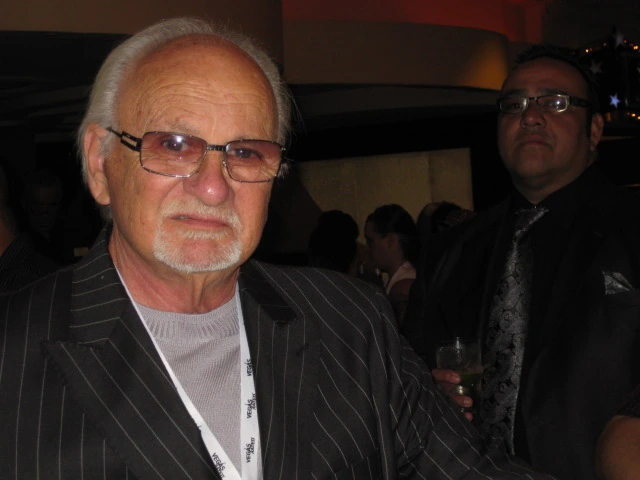
Frank Antonacci is a Connecticut-based waste and recycling industry executive, currently serving as chief operating officer (and, in some filings, chief executive) of USA Waste & Recycling and USA Hauling & Recycling in Enfield, CT. As of June 4, 2026, his estimated personal net worth falls in the range of $15 million to $40 million, with moderate confidence. That range is built from the scale of the family-owned business, documented real estate transactions, and the Antonacci Family Foundation's publicly filed net assets of just under $20 million. There is no verified public figure, no celebrity disclosure, and no bankruptcy record that pins the number precisely, so the honest answer is a range rather than a single dollar amount.
Frank Antonacci Net Worth Estimate and Key Income Sources

Marcus Holloway
4 Jun 2026

Which Frank Antonacci are we talking about?

Before going further, it is worth clearing up a genuine disambiguation problem. Searching "Frank Antonacci" turns up at least three distinct individuals. The first, and most relevant here, is Frank M. Antonacci of Somersville, Connecticut, a second-generation waste and recycling executive whose family founded USA Hauling & Recycling and USA Waste & Recycling.
The second is Frank M. Antonacci, Jr. , who appears on the RecycleCT board as a manager at Murphy Road Recycling in Enfield and has served as Vice Chair since October 2018, suggesting he may be a close family relative (possibly a son or nephew) rather than the same person as the COO.
The third is an entirely unrelated "Frank Antonacci, Deceased" who appears in a New York Supreme Court medical malpractice case, which has nothing to do with the waste industry. The subject of this article is the first: the senior Frank Antonacci connected to USA Hauling & Recycling and USA Waste & Recycling, celebrated as a 2026 NWRA Hall of Fame inductee alongside his brother Jerry Antonacci.
Net worth snapshot: the number, the date, and how confident we are
| Detail | Value |
|---|---|
| Estimate date | June 4, 2026 |
| Estimated personal net worth range | $15 million to $40 million |
| Confidence level | Moderate (limited public disclosure; private company) |
| Primary wealth driver | Family-owned waste/recycling business (equity stake) |
| Notable foundation asset (public record) | $19.9 million net assets, Antonacci Family Foundation (FY 2023) |
| Known real estate transactions | $14.5M property spend (USA Waste, 2025); $2.55M transfer station (2024); $1.85M Enfield HQ (2019) |
The $15 million to $40 million range reflects a careful read of what is publicly available. If you are specifically looking for Frank Antonacci net worth figures, the best available public trail still points to that same range $15 million to $40 million range. The Antonacci Family Foundation reported net assets of $19,923,394 with zero liabilities as of fiscal year 2023, according to its Form 990-PF filed with the IRS and surfaced through ProPublica's Nonprofit Explorer.
That foundation figure is not Frank's personal net worth, but family foundations of that size typically reflect broader family wealth in the tens of millions. Layered on top of that is his equity in a privately held company operating more than 500 frontline trucks and roughly 1,500 employees.
Private waste and recycling companies of that scale routinely carry enterprise valuations in the $100 million to $300 million range, and a meaningful ownership stake would translate to a personal net worth well above $10 million. The upper bound of $40 million reflects a scenario where his equity stake is substantial. The lower bound of $15 million is conservative, anchored by the foundation assets alone and modest personal real estate assumptions.
How Frank Antonacci built his wealth: career timeline and income sources
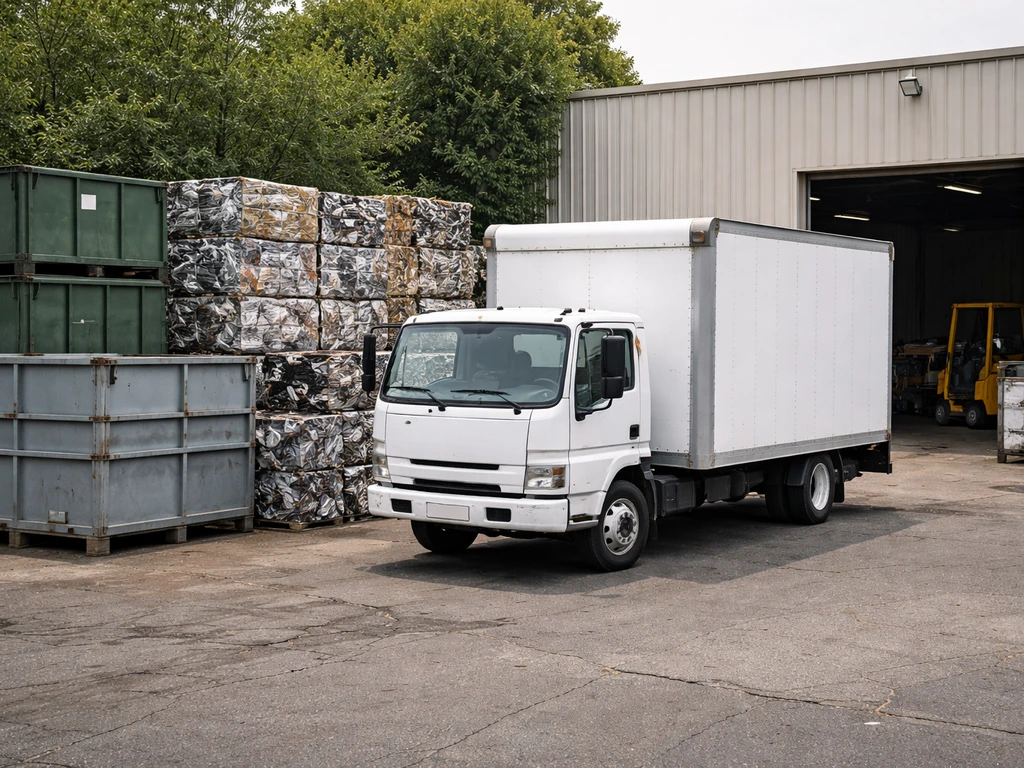
The Antonacci family's wealth story starts in 1974, when Guy "Sonny" Antonacci founded what would become USA Waste & Recycling with a single truck. That origin story, documented on the company's own website, is the classic small-business-to-regional-operator arc. Frank and his brother Jerry grew up inside that business and eventually took over leadership, turning a single-truck operation into one of Connecticut's most significant privately held waste haulers.
Frank has been publicly identified as chief operating officer of USA Hauling & Recycling (per Waste360 and Hartford Business Journal coverage) and separately as chief executive of USA Waste (per a March 2026 CT Mirror article where he was quoted advocating for a property acquisition in Torrington). Waste Today, in its March 27, 2025 coverage of Murphy Road Recycling’s MRF expansion, identifies Frank M.
Antonacci as chief operating officer at Murphy Road Recycling in Enfield, Connecticut Waste Today identifies Frank M. Antonacci as chief operating officer at Murphy Road Recycling in Enfield, Connecticut.
The dual titles likely reflect a corporate structure where the same family-controlled entity operates under multiple related brand names. In January 2025, Hartford Business Journal reported the company employing around 900 people at its Enfield operations, a workforce that suggests annual revenues in the range of $100 million to $200 million for a company of this type.
By early 2026, NWRA's own framing of the company cited more than 500 frontline trucks and approximately 1,500 employees, suggesting growth between those reporting periods. The NWRA’s Chapter Leadership Awards page lists Frank M. Antonacci as a 2023 recipient [Frank M. Antonacci is listed as a 2023 Chapter Leadership Awards recipient by NWRA](https://wasterecycling.
org/about/awards/chapter-leadership-awards/).
His income sources are almost entirely tied to this family business. As a senior executive and presumed equity owner of a multi-generation family company, Frank's wealth comes from a combination of executive compensation (salary and bonuses), ownership distributions from the operating company, and likely co-ownership of real estate assets used by or adjacent to the business. There are no reported entertainment contracts, public stock holdings, or external investment vehicles associated with his name.
Assets, liabilities, and the major wealth drivers
The most concrete financial data points on Frank's side of the ledger come from documented real estate activity. In 2019, Hartford Business Journal reported that USA Hauling & Recycling paid $1. 85 million for a former LEGO office building in Enfield to serve as company headquarters, with Frank quoted directly in the coverage. In September 2024, Hartford Business Journal reported that KR Watertown Recycling LLC, controlled by Guy and Frank M.
Antonacci, purchased a Watertown transfer station from the MIRA Dissolution Authority for $2. 55 million. Then in January 2025, the company announced a $14. 5 million property spend for further expansion, with Frank quoted as COO explaining the strategic rationale.
These transactions are not Frank's personal expenditures, but in a family-owned private company, the line between corporate asset accumulation and family wealth is often thin.
On the liability side, there are no public records of personal bankruptcy, judgments against Frank individually, or significant personal debt disclosures. The Antonacci Family Foundation carries zero liabilities per its 990-PF. That clean balance sheet at the foundation level is a soft signal of financial stability rather than leverage-heavy growth. The foundation itself reported revenues of $2,132,845 in fiscal year 2023, suggesting active charitable giving and investment income rather than a dormant holding structure.
Controversies, environmental disputes, and legal financial context
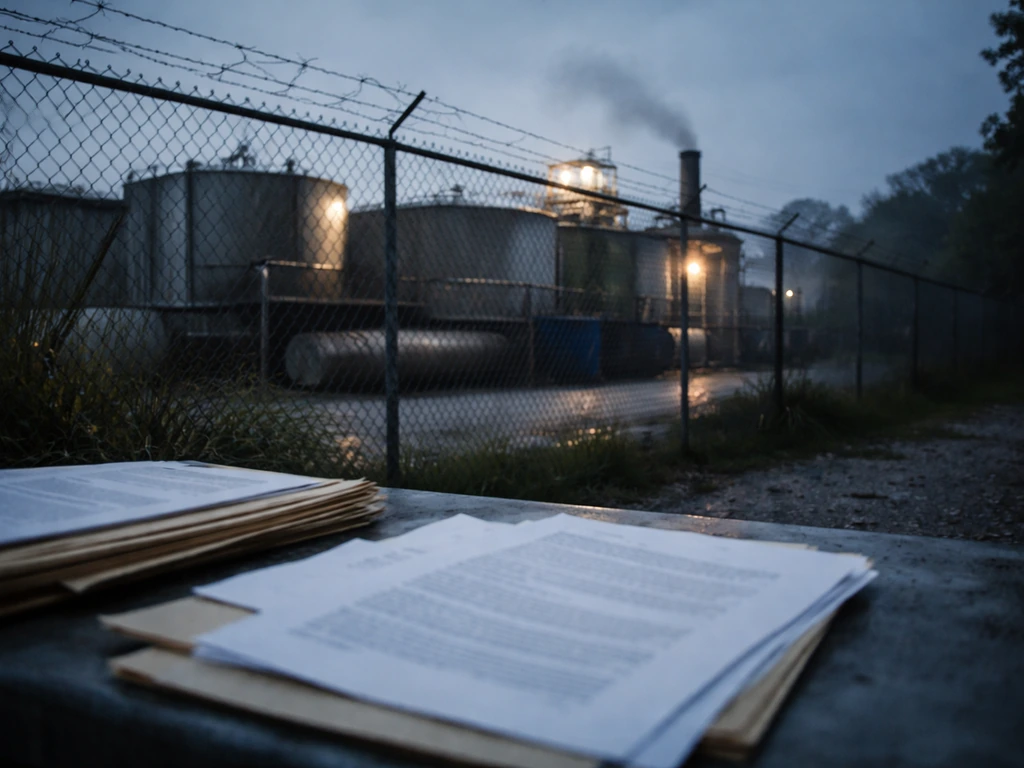
Frank Antonacci's name does appear in some legally and environmentally sensitive contexts, worth acknowledging directly. In June 2018, The Waterbury Observer reported that a citizen-suit intent-to-sue letter was sent to "Frank and Gerald Antonacci" alleging pollution by their companies and citing federal environmental statutes. The notice gave a 60-day remediation window under those statutes. There is no public record suggesting this resulted in a major financial judgment, settlement, or asset seizure against Frank personally, but the dispute signals the kind of regulatory and litigation exposure that is common for large waste operators.
Separately, a Justia-hosted Ohio appellate decision references "transfer or transload stations owned or operated by Frank Antonacci and Gerald Antonacci," in the context of an administrative reliability and expertise dispute. That case involved the operations of a business entity rather than personal criminal or financial liability, and there is no indication of a criminal conviction or financial penalty attached to Frank specifically in that matter. None of the available records show asset seizures, restitution orders, or criminal fines connected to Frank Antonacci, the Connecticut waste executive. The legal footprint here is that of a large regional operator navigating regulatory and permitting disputes, which is common in the industry, rather than the kind of crime-related financial consequence that would materially reshape a net worth estimate.
How we build this estimate: sources, methods, and what we cannot know
This site is transparent about how net worth estimates get built, especially for private individuals who never file public disclosures. For Frank Antonacci, the methodology layers several data sources. The Antonacci Family Foundation's Form 990-PF, publicly available through ProPublica's Nonprofit Explorer, gives us a verified floor for family wealth of just under $20 million in net assets. Real estate transactions recorded in Connecticut land records and reported by Hartford Business Journal give us a sense of asset accumulation behavior. Industry benchmarks for privately held waste and recycling companies of USA Hauling's scale help us model a plausible enterprise value range, and from that, a probable equity stake value for a founding-family executive.
What we cannot know from public sources: Frank's exact ownership percentage in the operating company, his total compensation history, whether there are private loans or undisclosed liabilities, the exact current value of any real estate held in his name versus corporate entities, or whether there are trusts, investment accounts, or other structures that hold additional wealth outside the foundation. For a private executive like Frank, net worth estimates are inherently approximate. The confidence here is moderate, not high. If the company were sold or taken public, the number could move sharply in either direction depending on deal terms.
How Frank Antonacci compares to similar figures, and the myths to ignore
Within this site's universe of notable Franks, Frank Antonacci occupies a category that is distinctly different from entertainment figures. His wealth is industry wealth, built through operational scale and real asset accumulation rather than royalties, licensing, or celebrity.
That puts him in a different league from a figure like Frank Sinatra, whose estate and licensing revenues have been documented in the hundreds of millions, or tech-adjacent figures like Franklin Antonio of Qualcomm, whose wealth is tied to equity in a publicly traded corporation. While that celebrity profile is often discussed in articles about Frank Sinatra net worth, Frank Antonacci's situation is driven by private business ownership and industry scale.
The comparison that makes more sense is other regional waste industry principals: privately held, operationally focused, multi-generational family businesses where the founder's descendants have turned a service business into a significant regional enterprise.
The main myth to push back on with Frank Antonacci is the temptation to either wildly overestimate or dismiss his wealth because the industry is unglamorous. Waste and recycling is a capital-intensive, contract-driven, recession-resistant business. Companies of USA Hauling's size are regularly acquired by national consolidators (such as Waste Management or Republic Services) for multiples that deliver significant windfalls to founding families. Frank has not sold, as far as public records show, but the theoretical enterprise value of a 500-truck, 1,500-employee operation is substantial. Equally, it would be wrong to assume he is a billionaire: private regional operators at this scale rarely clear nine figures in personal net worth without a liquidity event.
What to do if you want to verify or track this number

If you want to go deeper on Frank Antonacci's finances, there are concrete steps you can take right now. The Antonacci Family Foundation's 990-PF filings are publicly searchable on ProPublica's Nonprofit Explorer at no cost. These update annually as the IRS processes new filings, so checking back each fall gives you a current snapshot of the foundation's asset base. Connecticut land records are public and searchable through the Secretary of State's business registry and individual town land-records offices. The Hartford Business Journal covers the Connecticut business community closely and has reported on Frank's company multiple times; setting a news alert for "USA Waste" or "USA Hauling" will surface any major transactions, acquisitions, or leadership changes.
Watch for a few specific triggers that would change this estimate significantly. A sale of USA Hauling or USA Waste to a national consolidator would be the biggest single event: deals like that in the industry often value companies at 8 to 12 times EBITDA, and a transaction of that scale could push Frank's personal net worth into the $50 million to $100 million range or beyond, depending on his stake. Conversely, a major environmental enforcement action with financial penalties, or a recession-driven contraction in commercial waste volumes, would compress the estimate. The 2026 NWRA Hall of Fame induction (announced for a June 10 ceremony) may also generate fresh reporting on the company's history and scale, which could surface new details worth tracking.
Finally, keep the disambiguation point in mind whenever you see the name in the news. Frank M. Antonacci, Jr. , the Murphy Road Recycling manager and RecycleCT board member, is a separate individual whose financial profile would need its own analysis.
Any results involving a Frank Antonacci in New York medical or estate litigation are unrelated entirely. The waste executive in Enfield, Connecticut is the Frank Antonacci with a meaningful and estimable net worth in the $15 million to $40 million range as of today. If you are comparing net worth estimates across unrelated notable figures, you may also want to review franklin loufrani net worth for a different industry context.
If you are also looking for a figure for Franklin Antonio net worth, the names are easy to mix up, but they refer to different people Frank Antonacci with a meaningful and estimable net worth in the $15 million to $40 million range.
FAQ
Why does the estimate use a wide $15 million to $40 million range instead of a single number?
Because Frank Antonacci is tied to a private, family-controlled operator, there is no public disclosure of his ownership percentage, total compensation history, or personal liability structure. The article can only triangulate from foundation assets, reported business scale, and documented real estate activity, which supports a range rather than a precise figure.
Does the Antonacci Family Foundation net assets figure mean Frank Antonacci is personally worth about $19.9 million?
No. Foundation net assets are reported at the foundation entity level, not as direct owner equity for a specific individual. Even though family foundations often correlate with broader family wealth, the foundation figure is best treated as a floor for family resources, not a direct 1-to-1 proxy for Frank’s personal net worth.
How do executive compensation and “company distributions” typically show up in a net worth estimate for someone in a private waste business?
Public records usually do not reveal the exact breakdown. In practice, a meaningful portion of a founding-family executive’s wealth can be stored as equity value inside the operating company rather than paycheck income, so the estimate relies more on business scale, plausible valuation, and asset accumulation than on salary alone.
Could Frank Antonacci’s net worth be much higher if he owns real estate personally rather than through the company?
Yes, but it would require evidence of personal title, trust ownership, or other private holding structures. The article notes that the line between corporate assets and family wealth is often thin, but it also states that it cannot confirm which properties are personally held versus entity-held, which is a major reason the estimate cannot be tighter.
What would most quickly move the estimate upward or downward?
Upward, the biggest trigger would be a sale or major recapitalization of USA Hauling or USA Waste (especially if he holds a substantial equity stake). Downward, large environmental penalties, costly remediation orders, or a sustained downturn in commercial waste volumes could reduce enterprise value and therefore the implied personal equity value.
How does an environmental dispute affect net worth, if there is no visible personal bankruptcy or settlement record?
Even without a recorded personal judgment, enforcement exposure can still impact company valuation expectations, borrowing costs, and insurance or remediation reserves. The article suggests there is no public sign of a personal seizure, but the dispute is still a relevant risk factor that could influence equity value assumptions.
Does the presence of another Frank M. Antonacci in Connecticut or other legal records mean the net worth figure could be wrong?
It could be wrong if someone mixes individuals. The article specifically flags multiple “Frank Antonacci” entries and distinguishes the Enfield, Connecticut waste executive from other unrelated people. When researching, you should verify the company connection (USA Hauling/USA Waste) and location before applying any net worth estimate.
Could Frank Antonacci have wealth held in trusts or investments that are not visible in foundation filings?
Yes. Private executives often hold assets through trusts, retirement accounts, or investment entities that are not captured by a foundation’s Form 990-PF. The article explicitly states it cannot determine undisclosed investment accounts, trusts, or private loans, so missing private structures can widen the uncertainty.
How reliable is the “enterprise valuation multiple” logic mentioned for the waste industry?
It is directionally useful but not exact. Multiples like 8 to 12 times EBITDA can vary based on customer contracts, leverage, asset condition, and regulatory risk. The article uses these as scenario modeling inputs, so the exact net worth outcome depends heavily on the company’s actual EBITDA profile and his real ownership stake.
If USA Hauling or USA Waste were acquired, would his personal net worth necessarily rise immediately?
Not always. Deal terms could include earn-outs, retention payments, rollover equity, or debt refinancing that changes how value is distributed. The article notes that a sale would be the biggest event for changing the number, but it does not assume a simple all-cash, all-at-once transfer to him personally.