
Frank Zamboni's net worth is most commonly estimated at around $8 million, though that figure comes from low-verifiability sources rather than audited records. The more defensible answer is that his personal wealth, built almost entirely through his privately held manufacturing company Frank J. Zamboni & Co., likely ranged somewhere between $5 million and $15 million in today's terms at its peak, with no primary financial documents publicly available to pin it down more precisely. If you're searching this name hoping to find a living celebrity with a flashy lifestyle, you've landed in a different story: Frank Zamboni was a self-made inventor and quiet businessman who died in 1988, and his wealth was tied to one of the most quietly brilliant product monopolies in American sports history.
Frank Zamboni Net Worth: Estimate, Sources, and Timeline


Which Frank Zamboni are we talking about?
The Frank Zamboni that almost every search result points to is Frank Joseph Zamboni Jr., born January 16, 1901, in Eureka, Utah, to Italian immigrant parents. He grew up in Idaho, moved to California, and died on July 27, 1988, in Long Beach. He's the inventor of the modern ice resurfacing machine, the device that glides across hockey rinks between periods and is now universally called a Zamboni, regardless of brand. His surname was formally registered as a trademark for ice resurfacers, which tells you something about the scale of his cultural and commercial impact.
There is no prominent living celebrity, athlete, or public figure with this exact name competing for search traffic. If you arrived here looking for someone in entertainment, sports, or crime history with a similar-sounding name, you may want to check profiles for other Franks in this database. But if you searched specifically for Frank Zamboni, the inventor is almost certainly who you mean.
The net worth estimate: headline number and honest range
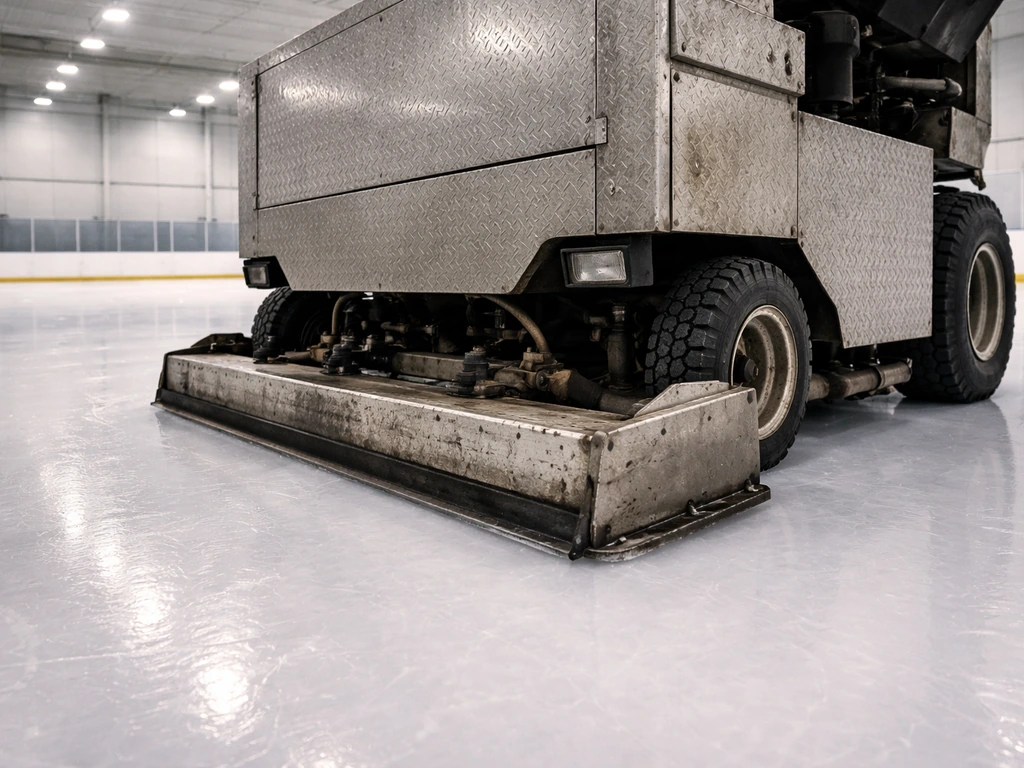
The most widely circulated estimate is $8 million, reported by celebrity net worth aggregators. On the other extreme, at least one site (VIPFAQ) throws out a figure close to $716 million for 2026, a number so disconnected from any documented evidence that it should be ignored entirely. The $8 million figure is at least plausible given the scale of the Zamboni business, but it isn't backed by estate filings, company valuations, or journalism-grade sourcing either.
Working from what we actually know: Frank J. Zamboni & Co. was a privately held family manufacturing business. It produced thousands of machines sold to NHL arenas, Olympic facilities, and recreational rinks worldwide. A reasonable conservative estimate for his personal net worth at or near its peak would be in the $5 million to $15 million range (roughly equivalent to $15 million to $45 million in 2026 dollars when adjusted for inflation). That range reflects the likely value of his equity in a dominant niche manufacturer with strong IP, not a Fortune 500 company. It also reflects the fact that Zamboni ran a lean, family-focused operation rather than a venture-backed empire.
Where the estimate comes from and what's missing
The honest answer is that no authoritative source, not Forbes, Bloomberg, any SEC filing, or probate court record, has published a verified net worth figure for Frank Zamboni. What we have instead are a few signals that allow us to triangulate.
- Business ownership: Zamboni founded Frank J. Zamboni & Co. in 1950 in Paramount, California, as a family partnership. Business ownership in a niche manufacturing market with essentially no direct competition is the clearest wealth driver.
- Patent portfolio: He was awarded 15 patents between 1928 and 1978, covering the ice resurfacer and related improvements. Patents create pricing power and barriers to entry, both of which translate to margin and company value.
- Production milestones: The company built its 1,000th machine by the late 1960s and later expanded with a second plant in Brantford, Ontario. Volume growth at that scale signals meaningful revenue.
- No public financials: Frank J. Zamboni & Co. is privately held. No annual reports, audits, or ownership disclosures are publicly filed.
- No probate or estate records located: A probate filing after his 1988 death would be the clearest primary source, but none appeared in the sources reviewed.
- Celebrity estimate sites: CelebrityHow's $8 million figure is explicitly based on Wikipedia and Google searches, not financial documents. It's a reasonable educated guess, not a researched valuation.
The missing data here is significant. Without a probate record, a business valuation, or credible journalism that interviewed family members or accountants, we're estimating the wealth of a private businessman who had little incentive to publicize his finances. That doesn't mean the estimate is meaningless, but it does mean you should hold it loosely.
How he built his fortune: a money timeline

Zamboni's financial story unfolds in three distinct phases. Understanding those phases helps explain why the wealth estimate looks the way it does.
Early career and groundwork (1920s to late 1940s)
Zamboni started his working life in the electrical trade, learning business fundamentals before moving into refrigeration and ice-related ventures in Southern California. In the late 1930s and 1940s, he co-owned and operated Iceland, an ice-skating rink in Paramount, California. It was the operational headache of resurfacing that rink manually, a process that took a crew over an hour, that pushed him to invent a mechanical solution. This phase was about building domain expertise and small-business ownership, not generating significant wealth.
Invention and commercialization (1949 to late 1960s)
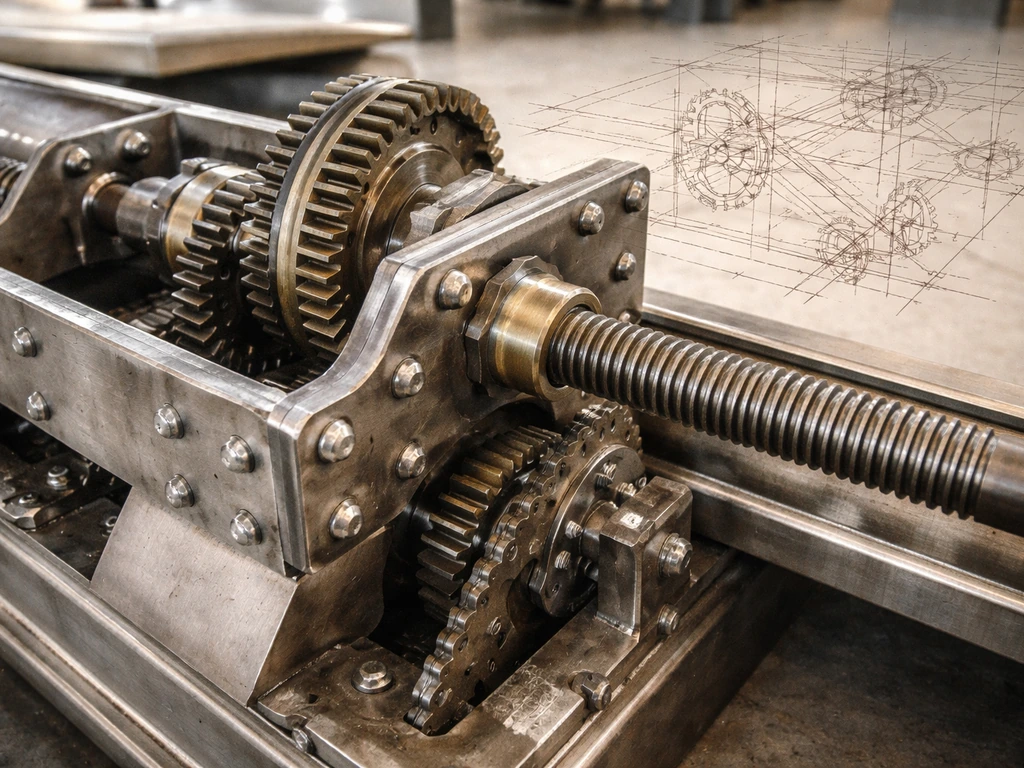
Zamboni applied for his Model A ice resurfacer patent in 1949, and it was granted in 1953. He formally established Frank J. Zamboni & Co. in 1950 to manufacture and sell the machines. The commercial breakthrough came in 1952 when figure skater Sonja Henie saw the machine at his rink and ordered one for her touring show. That was the company's first outside sale, and it cracked open a market that essentially had no competition. By the late 1960s, the company had built its 1,000th machine. This is almost certainly the period of fastest wealth accumulation, as the business scaled with minimal overhead and enormous pricing power in a captive market.
Mature business and later years (1970s to 1988)
Through the 1970s and early 1980s, Zamboni continued patenting improvements (his patent activity ran through 1978) and the company expanded manufacturing internationally, including the Brantford, Ontario plant. By this point the Zamboni name was so embedded in ice sports culture that the trademark itself was at risk of becoming genericized, which is actually a sign of extraordinary brand dominance. Wealth likely stabilized during this phase rather than growing aggressively, as the company remained deliberately small and family-run. Zamboni died in 1988 at age 87, and the company passed to family ownership, where it remains today.
The real wealth drivers behind the number
Zamboni's wealth story is less about salary or investment returns and more about the compounding value of owning a dominant niche product. Ice resurfacers are not cheap. Professional-grade Zamboni machines have historically been priced in the $75,000 to $150,000 range per unit, and the company has supplied NHL arenas, Olympic facilities, and thousands of recreational rinks globally. Even a conservative estimate of a few hundred units sold per year at those price points suggests annual revenues in the tens of millions for the company at peak operation.
Add to that the patent protection, which gave the company decades of competitive insulation, and the family ownership structure, which kept profits inside a small group rather than distributing to outside shareholders. Zamboni didn't need a stock listing or a venture round. He had a product that rink operators had no real alternative to, and he built it in a factory he owned. That's the kind of structural advantage that quietly generates serious wealth without ever appearing on a magazine cover.
Name confusion: other Franks who might show up in your search

Searching a common first name like Frank alongside a less common last name like Zamboni should produce fairly clean results, and in this case it largely does. But the name Frank is shared by a wide range of public figures in this database, and it's worth briefly noting who you might confuse this person with or stumble across nearby.
Profiles on figures like Frank Zagarino (an actor) or Frank Guarini (a politician) represent very different wealth stories rooted in entertainment and public service respectively. If you meant Frank Zagarino instead of Frank Zamboni, his net worth would be tied to his entertainment career rather than the ice-resurfacing business. If you meant Frank Guarini, you may want to look at his separate public-service career and documented financial information rather than the Zamboni estimate. Frank Giordano and Frank Giuffrida bring their own financial trajectories from other industries entirely. If you came here specifically to look up Frank Giordano net worth, note that this article focuses on Frank Joseph Zamboni Jr. and his business fortune. Frank Giuffrida net worth is a different story, since this article focuses on Frank Zamboni’s business wealth. None of these individuals are connected to the Zamboni name or the ice-resurfacing business. If you ended up on this page while searching for one of those people, the name overlap is coincidental and the financial profiles are completely distinct.
One confusion worth flagging: some net worth aggregator sites generate pages for any name that gets search traffic, and they sometimes pull figures from unrelated individuals or simply fabricate plausible-sounding numbers. The wildly inflated $716 million figure cited for Frank Zamboni on at least one site is almost certainly the result of this kind of automated content generation. Treat any estimate that lacks a clear methodology with skepticism, especially when the figure is dramatically higher than what any comparable private manufacturer's founder would reasonably hold.
How to verify this estimate and interpret it responsibly
Net worth estimates for private individuals who died before the internet era are genuinely hard to pin down. Here's how I'd approach verifying or refining the Frank Zamboni figure if you wanted to go deeper.
- Search probate records: In California, probate filings become public record after an estate is settled. A search of Los Angeles County probate records under 'Frank J. Zamboni' or 'Frank Joseph Zamboni' for filings after July 1988 would be the most direct path to a documented asset figure.
- Look for business valuation journalism: Trade publications covering the ice sports industry or manufacturing occasionally profile the Zamboni Company. Any article quoting revenue figures or company valuations would provide an anchoring data point.
- Check USPTO and business registrations: Frank J. Zamboni & Co. has a documented filing history. State business records in California and patent licensing records could help triangulate the revenue scale of the company during his lifetime.
- Cross-reference the family's public statements: The Zamboni Company has been periodically covered in mainstream press. Interviews with family members who inherited the business sometimes include revenue or valuation references.
- Treat celebrity net worth sites as starting points only: Sites like CelebrityHow and VIPFAQ are useful for surfacing a name and a ballpark figure, but their methodology is openly based on secondary web searches. They are not substitutes for document-based research.
The bottom line on uncertainty: the $8 million estimate is a reasonable educated guess that aligns with what we'd expect for a successful private manufacturer of this scale. The $716 million figure is not credible. The true number almost certainly falls somewhere in the low-to-mid millions range in historical terms, possibly higher when you account for the full lifetime value of the business he built and left to his family. Until a probate record or credible business valuation surfaces, that's the most honest answer the available data supports.
| Source | Estimate | Methodology | Reliability |
|---|---|---|---|
| CelebrityHow | $8 million | Secondary web sources (Wikipedia, Google) | Low — no primary documents |
| VIPFAQ | ~$716 million | User-submitted / automated | Very low — not credible |
| This analysis | $5M–$15M historical / $15M–$45M inflation-adjusted | Business ownership, patent portfolio, production milestones, comparable manufacturer valuations | Moderate — no probate or audit data available |
FAQ
Why do net worth estimates for Frank Zamboni vary so much?
Because Frank J. Zamboni & Co. was privately held, most “net worth” pages are reverse-estimates from guesswork, not formal valuations. A more defensible approach is to treat the $5 million to $15 million band as equity in a small, dominant manufacturer, and to separate “company value” from “founder personal net worth” (founder equity could be smaller than total enterprise value).
How should I compare the different years mentioned in Frank Zamboni net worth claims?
Inflation adjustments can mislead if you compare different reference years. The article’s range for today’s terms is already framed as a modern-equivalent estimate, so if you see a dramatic 2026 figure, check whether the site is (1) inventing a base number and (2) then applying an inflation multiplier.
What practical factors matter most when estimating net worth for a private Zamboni-era manufacturer?
You can often sanity-check by looking for signals of pricing power and captive demand. For this business, the key variable is how many machines sold at premium, professional-grade pricing and what portion of revenue turned into owner equity inside a family-run, non-public company.
What evidence would actually be strong enough to treat a Frank Zamboni net worth figure as reliable?
Be cautious with any claim that says “verified,” “audited,” or “from probate” unless it names a specific court record, estate document, or clearly described valuation method. For this case, the article notes that no probate filing or journalism-grade interview has been publicly available to pin down a single definitive number.
Should I use the $8 million estimate or the much larger figures I see online?
If you only want a number to use in a comparison, the article’s conservative guidance is to start with the low-to-mid millions historical band and avoid outliers that do not match the likely scale of a privately owned manufacturer. A good rule is to downgrade any estimate that exceeds the plausible value of a niche industrial founder by an order of magnitude without documenting a valuation basis.
How can I tell if search results are mixing up Frank Zamboni with another Frank?
Name overlap is a real issue, and it can happen at two levels, search and database creation. The safest tactic is to cross-check the birth/death years and the specific industry keywords (ice resurfacing, ice resurfacers, manufacturing) rather than relying on the name alone.
Would Frank Zamboni’s income from patents and machine sales equal his net worth?
Yes, but “net worth” would usually be about equity at death, not annual revenue. Because the company stayed family-owned and privately held, you would need assumptions about retained earnings, ownership percentage, and whether profits were reinvested versus distributed, which is why the article frames it as a range rather than a point estimate.
What should I do if I want to dig deeper beyond the $5 million to $15 million range?
If you want to verify further, the most actionable next step is to search for probate-related references to the estate or for business valuation clues tied to the company’s ownership transition after his death in 1988. Without those documents, most “net worth” work remains a model built on assumptions.
During which phase of his career would Frank Zamboni’s wealth likely have grown fastest?
The timeline matters because wealth compounding would likely accelerate when the product starts scaling, for example after outside orders broaden the market (like the early major celebrity exposure mentioned in the article) and as unit production rises. Later periods may show stabilization if growth slows and the company stays deliberately family-run.
Does the trademark becoming genericized prove Frank Zamboni was extremely wealthy?
A genericized trademark signal can support the idea of brand dominance, but it does not directly translate into founder personal wealth. Trademark strength mainly supports pricing power and market defensibility, so net worth should still be modeled through ownership, sales volume, and retained profits rather than brand recognition alone.